
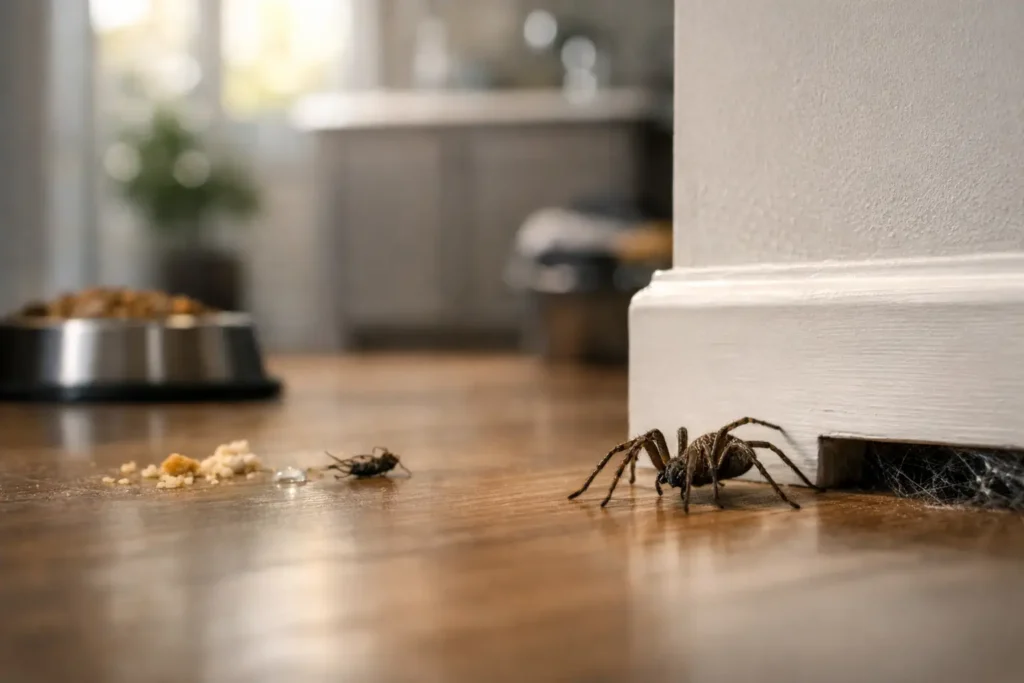
A spider on the wall is usually not the real problem. The question is what attracts spiders indoors in the first place – and the answer is often a reliable supply of food, shelter, moisture, or easy entry points. Spiders do not move into a home because it is dirty or because they are looking for people. They settle in where the conditions help them hunt, hide, and stay protected.
For homeowners, landlords, and business owners, seeing an occasional spider is normal. Seeing them repeatedly in the same rooms, finding multiple webs, or spotting spiders around stored items can point to a larger pest issue worth addressing.
What Attracts Spiders Indoors Most Often?
Spiders are predators. Their main reason for entering a structure is usually the insects already inside it. If gnats gather near windows, flies collect around trash, moths move through closets, or ants travel along baseboards, spiders have a food source waiting for them.
This is why spider prevention is rarely just about removing webs. Knock down a web without reducing the insect activity nearby, and another spider may use the same area soon afterward. Effective control starts by making the property less useful to both spiders and the pests they feed on.
1. Other insects inside the property
A steady insect population is the strongest attraction. Common spider prey includes flies, mosquitoes, moths, roaches, crickets, ants, silverfish, and small beetles. Even a minor pest issue can support several spiders, especially in quiet corners where insects gather unnoticed.
Check the areas that tend to attract bugs: kitchen floors and cabinets, pet feeding stations, indoor plants, windows, light fixtures, bathrooms, utility rooms, and trash areas. In commercial spaces, loading doors, break rooms, storage rooms, and dumpster areas often deserve the same attention.
2. Clutter and undisturbed storage
Cardboard boxes, stacked paper, stored clothing, unused equipment, and crowded garage shelves give spiders places to hide without being disturbed. These areas can also harbor the insects spiders hunt.
Clutter does not create spiders by itself, but it makes a building easier for them to occupy. This is particularly true in garages, attics, sheds, crawl spaces, storage closets, and behind furniture that rarely moves. In Southern California, warm garages and outdoor storage areas can remain appealing for much of the year.
3. Moisture and water sources
Many insects are drawn to moisture, and spiders follow the food. Leaky pipes, damp cabinets, condensation near air-conditioning equipment, wet floor mats, and slow-draining sinks can all contribute to pest activity.
Bathrooms, laundry rooms, basements, and kitchens are common places to find spiders for this reason. Fixing a leak will not instantly eliminate every spider, but it removes one condition that supports the insects they depend on. For property managers, prompt moisture repairs also protect the building from mold and material damage.
4. Cracks, gaps, and open doors
Spiders can enter through surprisingly small openings around doors, windows, pipes, vents, utility lines, and foundation gaps. A worn door sweep or torn window screen can be enough to give them access.
Some spiders wander indoors by accident while hunting around exterior walls. Others use openings that also allow in insects. Sealing entry points reduces the traffic in both directions and is one of the most practical long-term prevention steps.
5. Exterior lighting that draws insects
Porch lights, bright entry lighting, and lights near windows can attract flying insects after dark. Web-building spiders notice this dependable food source and often build close by, then may move inside through nearby gaps.
You do not have to leave your property dark. Consider placing brighter lights away from doors when possible, keeping exterior fixtures clean, and using lighting that is less appealing to insects. The right choice depends on security needs, visibility, and the layout of the property.
6. Landscaping and debris against the building
Dense shrubs, ivy, woodpiles, leaf litter, patio clutter, and stored materials placed directly against exterior walls create sheltered spider habitat. They also hold moisture and attract the insects spiders eat.
Keep vegetation trimmed back from the structure and avoid storing firewood, boxes, or outdoor materials against the home. This does not mean a landscaped yard causes an infestation. It means a clear buffer around the building makes it harder for spiders and other pests to reach openings.
7. Warm, quiet indoor spaces
Spiders look for stable places with limited activity. A warm closet, behind a refrigerator, under a sink, or inside an undisturbed storage area can provide shelter, particularly when outdoor temperatures shift.
Different spiders behave differently. Web-building spiders tend to stay where prey is available, while hunting spiders may roam through rooms, garages, or ground-level spaces. One wandering spider may simply be passing through. Repeated sightings in one area are more likely to signal favorable conditions there.
8. Outdoor spider activity near doors and windows
When webs and egg sacs are common around eaves, patio furniture, fences, windows, or exterior lights, indoor sightings often follow. Exterior conditions matter because the building is part of the spider’s hunting route.
Removing exterior webs carefully and routinely can help, but be cautious around hidden corners, outdoor storage, and woodpiles. In California, certain species, including black widows, may use protected, low-traffic areas. Avoid reaching into dark spaces with bare hands, and use gloves when moving stored items.
How to Make Your Home Less Attractive to Spiders
A clean, well-sealed property with fewer insects is far less appealing to spiders. The best approach combines basic maintenance with targeted pest control rather than relying on one quick fix.
Start with a consistent routine:
- Vacuum webs, egg sacs, baseboards, window tracks, and behind furniture regularly.
- Store belongings in sealed plastic bins instead of loose cardboard, especially in garages and closets.
- Repair leaking faucets, plumbing connections, torn screens, and gaps around doors and utility lines.
- Keep food sealed, clean up crumbs, empty trash regularly, and address the insects that spiders are feeding on.
- Trim plants away from the structure and keep wood, yard debris, and stored materials off exterior walls.
These steps are effective for prevention, but they have limits. If spiders are entering through several structural gaps, prey insects are active throughout the property, or tenants continue reporting sightings, a more complete inspection is the faster path to reliable results.
When Spider Sightings Call for Professional Help
One spider does not automatically mean an infestation. However, professional service is a smart choice when you see frequent webs returning after cleaning, multiple spiders in bedrooms or living areas, egg sacs in storage spaces, or spiders near children, pets, customers, or tenants.
It is also wise to call for help if you suspect black widows, find spiders in a crawl space or garage that you do not want to handle, or notice other pests at the same time. Treatment should focus on the source: spider harborages, exterior entry points, and the insects supporting the activity. Simply spraying a visible spider may provide a short-term result while leaving the conditions unchanged.
At Impressive Exterminating, licensed professionals can inspect the property, identify likely access points and pest pressure, and recommend a safe, effective plan based on the situation. For homes and businesses in Los Angeles County and Orange County, ongoing protection can be especially helpful where warm weather keeps insect activity active beyond a short seasonal window.
A spider-free space begins with fewer hiding places, fewer prey insects, and fewer ways inside. If sightings keep interrupting your peace of mind, act before a small pattern becomes a recurring problem.