Termites rarely announce themselves before they cause expensive trouble. A local termite inspector knows where Southern California termites tend to hide, what conditions draw them in, and how to spot early evidence before visible damage spreads through walls, floors, or framing.
For homeowners, landlords, and business owners, an inspection is not just a box to check during a real estate transaction. It is a practical way to protect a major investment, address moisture or wood-to-soil conditions, and make informed decisions before a small issue becomes a large repair.
Why Local Experience Matters With Termites
Termite activity depends on climate, construction methods, landscaping, and the conditions around a building. In Los Angeles County and Orange County, drywood termites and subterranean termites can both create problems, but they behave differently and require different treatment strategies.
Subterranean termites live in the soil and travel through sheltered mud tubes to reach wood. They are often associated with moisture, foundation gaps, plumbing leaks, and wood that sits too close to the ground. Drywood termites can live inside dry wood above ground, including attic framing, trim, cabinets, doors, and furniture. Their presence may be harder to notice until small piles of pellet-like droppings, known as frass, appear near an infested area.
A qualified inspector familiar with local conditions can assess the evidence rather than make assumptions. That matters because a mud tube does not automatically reveal the full extent of activity, and a few pellets do not necessarily mean every part of a property needs the same treatment. The right recommendation should match the termite species, the location of the infestation, access conditions, and the level of risk.
What a Local Termite Inspector Looks For
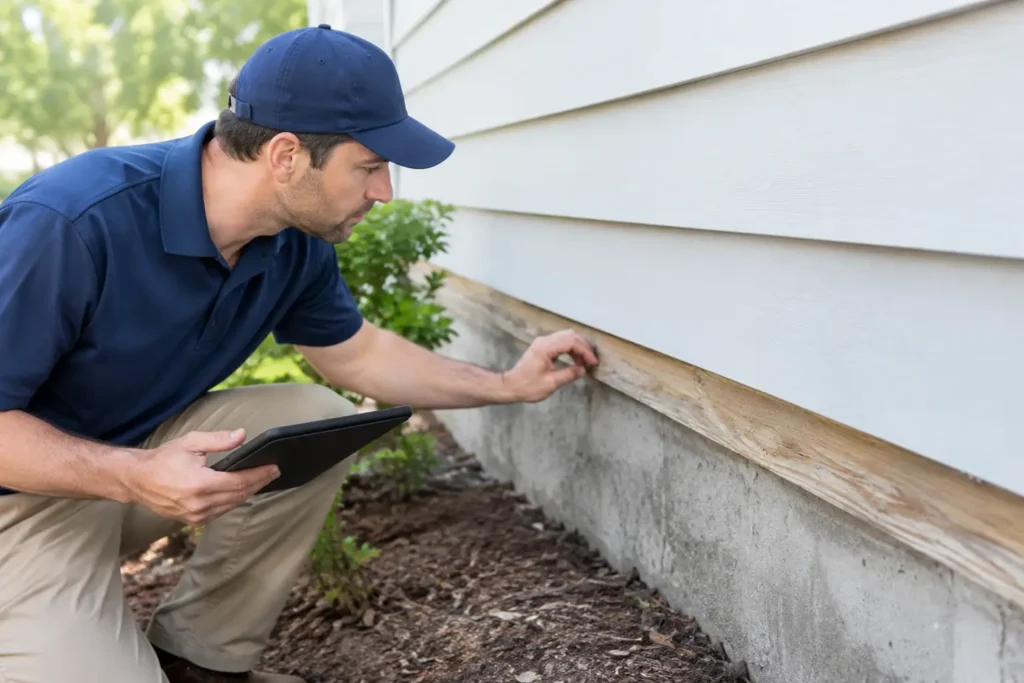
A thorough termite inspection involves much more than a quick walk around the outside of a home. The inspector evaluates accessible areas inside and outside the structure, looking for direct signs of termites as well as conditions that make an infestation more likely.
Evidence of Current or Past Activity
The most recognizable signs include mud tubes, damaged or hollow-sounding wood, blistered paint, discarded wings, and drywood termite frass. Inspectors may also find damaged baseboards, window frames, roof eaves, attic lumber, subfloors, or wooden fencing connected to the structure.
Not all wood damage is termite damage. Water intrusion, wood rot, carpenter ants, and aging materials can create similar-looking issues. A professional inspection helps separate those possibilities so you are not paying for a termite treatment when a repair, moisture correction, or a different pest service is needed.
Entry Points and High-Risk Conditions
Termites take advantage of openings that most property owners never notice. An inspector may check expansion joints, plumbing penetrations, foundation cracks, crawl space vents, utility lines, and areas where soil or mulch is too close to siding or stucco.
Moisture is another key concern. Leaky faucets, poor drainage, clogged gutters, air-conditioning condensation, and plumbing leaks can create favorable conditions for subterranean termites. The inspection should identify these contributors because treatment works best when the property conditions that support termite activity are addressed too.
Accessible Structural Areas
Inside, an inspector may review garages, closets, utility rooms, baseboards, window and door frames, attics, crawl spaces, and areas around bathrooms and kitchens. Outside, the inspection may include foundations, patios, decks, fences, wood piles, landscaping borders, and exterior trim.
Access matters. Stored belongings, finished walls, locked rooms, low-clearance crawl spaces, or dense landscaping can limit what is visible during an initial inspection. A dependable inspector will explain those limitations clearly rather than claiming to see behind every wall or beneath every surface.
What to Expect During the Inspection
Most termite inspections begin with a discussion of what you have seen. Bring up pellet piles, swarming insects, soft wood, recent leaks, past treatments, or areas where you have noticed unusual damage. Photos can be helpful, especially if the evidence appeared only briefly.
The inspector will then examine accessible portions of the property and document relevant findings. If termites are found, you should receive a straightforward explanation of where the activity appears to be, what type of termite may be involved, and what treatment options fit the situation.
A good recommendation should also make room for trade-offs. Localized treatment can be effective when activity is isolated and the affected areas are accessible. Whole-structure fumigation may be recommended when drywood termite activity is widespread, difficult to locate, or found in multiple areas. For subterranean termites, treatment may involve soil applications, baiting strategies, or a combination of measures based on construction and infestation pressure.
The least disruptive option is not always the most complete option, and the most extensive option is not always necessary. Ask why a specific approach is being recommended and what level of protection it provides.
Questions Worth Asking Before You Approve Treatment
You do not need to be a termite expert to make a sound decision. You do need clear answers. Ask whether the inspector found active termites, old damage, or conditions that could attract termites in the future. Find out which areas are affected, whether repairs are needed, and whether those repairs should happen before or after treatment.
It is also reasonable to ask about preparation requirements, estimated timing, occupancy restrictions, pet and child safety instructions, warranty terms, and follow-up inspections. For rental or commercial properties, ask how the service can be coordinated with tenants, employees, and business operations to reduce disruption.
Be cautious with vague estimates that do not identify the location of the problem or the treatment being proposed. Termite service should be based on inspection findings, not a one-size-fits-all sales pitch.
When to Schedule a Termite Inspection
An inspection is a smart move when you see signs of termites, but waiting for visible evidence is not the only reason to schedule one. Consider an inspection before buying or selling a property, after water damage or a plumbing leak, before major remodeling, or when you have not had the structure evaluated in several years.
You should also act quickly after a swarm. Flying termites indoors or around the exterior can signal a nearby colony, although swarming insects are sometimes confused with flying ants. Save a sample or take a clear photo if possible. An inspection can identify the insect and determine whether the property itself is at risk.
For property managers, routine inspections can help prevent surprise repair costs and tenant complaints. For business owners, early detection helps protect inventory, finishes, and the professional appearance of the property. Prevention is usually less disruptive than responding after structural damage becomes obvious.
Simple Steps That Support Long-Term Prevention
Termite treatment is a critical part of controlling an active infestation, but prevention continues after the service visit. Keep firewood, lumber, cardboard, and other cellulose materials away from the building whenever possible. Avoid allowing mulch or soil to cover weep screeds, siding, or other exterior structural components.
Correct moisture issues promptly. Repair leaking pipes and exterior faucets, keep gutters and downspouts directing water away from the foundation, and make sure irrigation does not constantly soak the soil near the structure. Trim landscaping so inspectors can access the exterior and so plants do not trap moisture against walls.
These steps do not guarantee that termites will never appear. They do reduce favorable conditions and make inspections more effective. That is especially valuable in Southern California, where termite pressure can continue year-round.
When you need answers quickly, Impressive Exterminating can provide a professional inspection and a treatment plan based on your property’s actual conditions. The best time to find termite activity is before it turns into a repair project, so schedule an inspection when the first warning sign appears – or before one has the chance to.