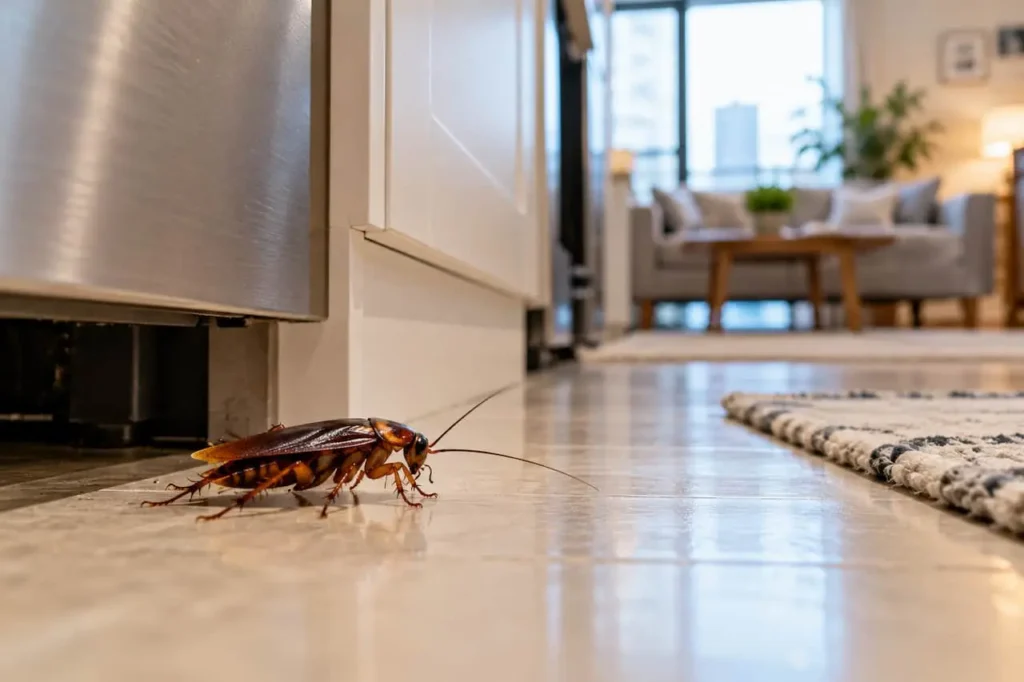
Finding a cockroach in a clean apartment can be frustrating. You wipe down your kitchen, take out the trash, store food properly, and keep your floors spotless, yet a roach suddenly appears near the sink or bathroom.
The problem is that cockroaches do not need a dirty apartment to survive. They need access to food, moisture, shelter, and a way inside. In apartment buildings, they may enter through plumbing openings, wall gaps, shared utility spaces, or neighboring units.
For renters in Los Angeles County and Orange County, understanding these hidden causes is the first step toward preventing recurring infestations.
Here are the most common reasons cockroaches appear in clean apartments and what you can do to stop them.
Why Do Cockroaches Appear in a Clean Apartment?
Cockroaches can enter clean apartments through structural gaps, shared plumbing, deliveries, and openings around doors or windows. Some species also live outdoors and occasionally enter buildings while searching for moisture or shelter.
Cleaning helps remove food sources, but it cannot eliminate cockroaches already hiding inside walls, cabinets, appliances, or neighboring units.
The key is to identify where they are coming from rather than assuming your cleaning routine is the problem.
7 Hidden Reasons Cockroaches Appear in Clean Apartments
1. Cockroaches Are Coming From Neighboring Apartments
One of the most overlooked causes of cockroaches in a clean apartment is activity elsewhere in the building.
Cockroaches can move between connected apartments through openings around plumbing, electrical lines, wall cavities, and shared utility spaces. If a neighboring unit has an infestation, roaches may eventually reach your kitchen or bathroom.
This is especially important in multi-unit buildings where pest activity can spread beyond a single apartment.
What you should do:
- Report recurring cockroach sightings to your landlord or property manager.
- Ask whether neighboring units or shared areas have been inspected.
- Request an inspection of plumbing openings, utility spaces, and adjoining walls.
- Keep a record of sightings and previous treatments.
Treating only your apartment may provide temporary relief if the source remains untreated elsewhere in the building.
2. Small Gaps Around Pipes Let Roaches Inside
Cockroaches can squeeze through surprisingly small openings. Even when your apartment looks well maintained, gaps around water pipes, drain connections, and utility lines may provide easy access.
Check underneath kitchen and bathroom sinks, especially where pipes pass through cabinets or walls.
Also inspect gaps around baseboards, damaged weather stripping, and spaces beneath entry doors.
How to prevent entry:
- Look for openings around pipes and utility lines.
- Photograph gaps that appear to connect with shared walls or concealed spaces.
- Ask your landlord to repair openings that require maintenance.
- Use appropriate sealants for small gaps when permitted by your lease.
Avoid sealing plumbing access points that need to remain accessible for repairs. If you suspect roaches are entering through concealed building spaces, request a professional inspection.
3. Hidden Leaks and Moisture Attract Cockroaches
Cockroaches need water to survive, which makes damp areas particularly attractive.
A kitchen can look perfectly clean while a slow leak underneath the sink provides enough moisture to support cockroach activity. The same problem can occur around bathroom plumbing, refrigerators, dishwashers, and washing machines.
In some cases, condensation or poorly ventilated cabinets can create favorable conditions.
Signs to look for include:
- Dampness beneath sinks.
- Water stains inside cabinets.
- Dripping faucets or loose plumbing connections.
- Moisture around appliances.
- Persistent musty odors.
The solution: Repair leaks promptly, dry wet surfaces, improve ventilation where possible, and avoid leaving standing water in sinks overnight.
If cockroaches repeatedly appear near plumbing fixtures, investigate both the moisture source and possible entry points instead of relying on cleaning alone.
4. Cockroaches Are Hiding Inside Kitchen Appliances
You may clean your countertops daily without realizing that cockroaches are hiding behind your refrigerator, beneath your stove, or inside other sheltered spaces.
These locations can provide warmth, protection, and access to tiny food particles. Cockroaches may also hide in cabinet hinges, appliance crevices, and narrow spaces beneath kitchen units.
This is one reason you might see a cockroach at night even when the kitchen looks spotless during the day.
What you should do:
- Clean accessible spaces behind and beneath appliances.
- Remove crumbs and grease from hard-to-reach areas.
- Inspect cabinet corners and appliance surroundings.
- Look for droppings, shed skins, and egg cases.
- Avoid spraying electrical components or applying pesticides where the product label does not permit use.
If you regularly see cockroaches emerging from an appliance or nearby wall opening, a professional inspection can help identify the hiding place and determine the appropriate treatment.
5. Grocery Bags, Cardboard Boxes and Deliveries Bring Roaches Inside
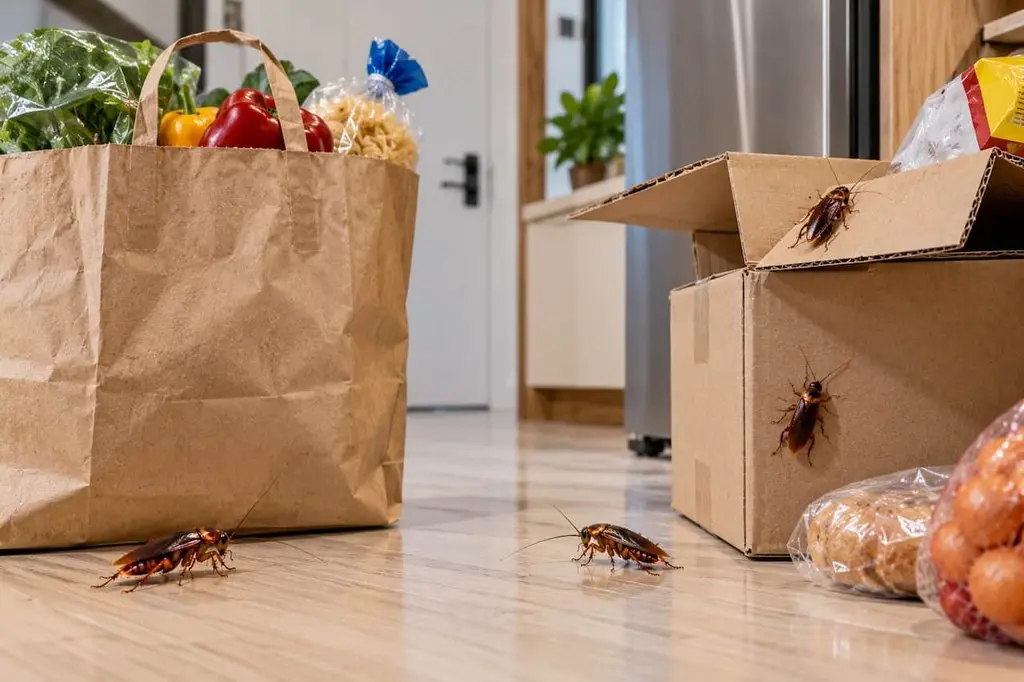
Cockroaches can occasionally enter an apartment in grocery bags, used appliances, furniture, packages, or cardboard boxes.
Corrugated cardboard can also provide hiding places, particularly when boxes are stored for long periods in dark areas.
This does not mean every delivery carries cockroaches. However, inspecting incoming items is a useful preventive step, especially when you begin noticing roaches shortly after moving or bringing secondhand items home.
Prevention tips:
- Inspect used furniture and appliances before bringing them indoors.
- Break down unnecessary cardboard boxes and remove them promptly.
- Avoid storing delivery boxes beneath kitchen sinks or beside refrigerators.
- Check grocery bags and packages if you notice suspicious activity.
If sightings begin after moving into a new apartment, inspect both your belongings and the property’s existing pest conditions.
6. Outdoor Cockroaches Are Entering Through Doors and Windows
Not every cockroach found indoors belongs to an established indoor infestation.
Some species commonly live outdoors and enter buildings while searching for moisture, shelter, or food. Warm weather, irrigation, landscaping, and activity around refuse areas can influence where cockroaches are found.
In Southern California, an occasional outdoor cockroach entering through an open door or a gap around a window may be a different problem from a recurring indoor infestation.
How to reduce entry:
- Repair damaged window screens.
- Install appropriate door sweeps where needed.
- Keep doors closed when possible.
- Report damaged exterior seals and building gaps.
- Keep trash areas clean and remove unnecessary outdoor debris.
Pay attention to where you find the insect. A large cockroach near an exterior entrance may suggest outdoor entry, while repeated small cockroaches in kitchen cabinets may indicate a different source.
Correct identification matters because treatment depends on the species and where it is living.
7. Your Apartment Has an Established Infestation
Sometimes cockroaches keep appearing because they are already reproducing in concealed areas.
Cockroaches often remain hidden during the day and become more active at night. By the time you notice repeated sightings, they may have established hiding places behind cabinets, inside wall voids, beneath appliances, or near plumbing.
Cleaning can reduce available food, but it will not necessarily eliminate a population hiding in inaccessible spaces.
Watch for these warning signs:
- Cockroaches appearing repeatedly over several days.
- Small cockroaches appearing alongside adults.
- Droppings inside cabinets or drawers.
- Egg cases or shed skins near hiding places.
- Roaches appearing in multiple rooms.
- Continued sightings after basic prevention measures.
When these signs appear, arrange an inspection to determine the extent of the activity and the appropriate treatment.
For recurring infestations, professional cockroach control can help identify hiding places, entry routes, and treatment options.
How to Get Rid of Cockroaches in a Clean Apartment
If you are already seeing cockroaches, follow these steps to address the problem systematically.
Step 1: Identify Where You See Them
Record the room, approximate time, and location of each sighting. Check whether the cockroaches appear near drains, appliances, doors, or shared walls.
Photographs can help a pest professional identify the species and understand the pattern of activity.
Step 2: Remove Food and Water Sources
Store food in sealed containers, clean spills promptly, remove rubbish regularly, and address leaks.
Do not leave pet food exposed overnight if it can be avoided. Keep sinks and counters as dry as practical.
These steps make your apartment less attractive to cockroaches, although they may not eliminate an existing infestation.
Step 3: Inspect and Seal Entry Points
Look for gaps around plumbing, doors, windows, and baseboards. Ask your landlord to address structural openings and maintenance issues.
Sealing entry points is especially important when cockroaches appear to be entering from shared building spaces.
Step 4: Avoid Randomly Combining Pest Control Products
Using several sprays, foggers, and baits without a plan can make treatment less effective and may create unnecessary exposure.
Some sprays can interfere with cockroach bait products. Foggers may also fail to reach the narrow spaces where cockroaches hide.
Follow product labels carefully and never apply pesticides to food-contact surfaces unless explicitly permitted.
For additional guidance, read Are Pest Treatments Safe Indoors? What to Know.
Step 5: Contact Your Landlord and Request an Inspection
If cockroaches continue appearing, notify your landlord or property manager in writing.
Include photographs, dates, locations, and details of any previous treatments. Ask for an inspection of your apartment and, where appropriate, adjoining units or shared areas.
California’s tenant guidance explains that landlords must maintain habitable rental housing, including addressing qualifying pest problems. Responsibilities can depend on the circumstances, so renters should document the issue and seek local guidance if it is not resolved.
Step 6: Arrange Professional Treatment When Needed
If cockroaches continue appearing despite preventive measures, professional treatment may be necessary.
A technician can assess the species, locate hiding places, identify contributing conditions, and recommend targeted treatments. Depending on the infestation, this may involve baiting, crack-and-crevice applications, monitoring, or other appropriate methods.
For broader prevention, explore General Pest Control.
When Should You Worry About Cockroaches in a Clean Apartment?
One cockroach does not automatically mean your apartment has a large infestation. However, repeated sightings should not be ignored.
Consider requesting an inspection if:
- You see cockroaches on multiple days.
- Small cockroaches appear in kitchen or bathroom cabinets.
- Droppings or egg cases are visible.
- Cockroaches appear in different rooms.
- Activity continues after cleaning and basic prevention.
- Neighboring units or shared building areas may be affected.
Cockroaches can contaminate surfaces and contribute to allergic reactions, particularly in people sensitive to cockroach allergens. Addressing the source early can help prevent the problem from becoming more difficult to manage.
If you are unsure which pest is present or why it keeps returning, Impressive Exterminating Pest Control offers pest control services for homes and businesses throughout Los Angeles County and Orange County.
Frequently Asked Questions
1. Why do I have cockroaches if my apartment is clean?
Cockroaches can enter through plumbing gaps, shared walls, doors, windows, deliveries, and other openings. They may also hide in appliances or concealed spaces. Cleanliness reduces available food but cannot prevent every possible entry route.
2. Can cockroaches come from a neighbor’s apartment?
Yes. Cockroaches can move between connected units through openings around pipes, utility lines, and shared structural spaces. If the problem keeps returning, ask property management to investigate potential sources beyond your apartment.
3. Does seeing one cockroach mean I have an infestation?
Not necessarily. An isolated cockroach may have entered from outdoors or arrived with an item. Repeated sightings, young cockroaches, droppings, and egg cases are stronger reasons to request an inspection.
4. Why do I see cockroaches at night but not during the day?
Cockroaches are generally nocturnal and tend to hide in protected areas during daylight. Seeing them at night is common, but frequent daytime sightings may indicate significant activity or disturbed hiding places.
5. Can cockroaches come through apartment drains?
Cockroaches may be found around drains and plumbing areas, but the route depends on the species and plumbing configuration. Gaps around pipes and fixtures can provide access even when a drain itself is not the source. Have recurring activity inspected rather than assuming every roach comes through the drain.
6. Should I tell my landlord if I see cockroaches in my apartment?
Yes. Report recurring activity promptly and preferably in writing. Include photographs, dates, and locations. Ask for an inspection and keep copies of communications. In California, landlord responsibilities include maintaining habitable housing, although the circumstances of a particular infestation can affect the appropriate next steps.
7. Will cleaning alone get rid of cockroaches?
Cleaning helps eliminate food sources, but it may not remove cockroaches hiding inside walls, appliances, cabinets, or adjoining units. Effective control often requires combining sanitation, moisture management, entry-point repairs, monitoring, and appropriate treatment.
8. When should I hire a professional cockroach exterminator?
Consider professional help when cockroaches appear repeatedly, you find droppings or egg cases, multiple rooms are affected, or basic prevention has not resolved the problem. Professional identification and targeted treatment can help address the source instead of relying on repeated surface spraying.
Stop Cockroaches at the Source
A clean apartment should feel comfortable, not leave you wondering when another cockroach will appear. The important thing to remember is that cockroaches in a clean apartment often indicate a hidden entry point, moisture problem, or nearby infestation—not necessarily poor housekeeping.
Start by identifying where the cockroaches appear, removing accessible food and water, and reporting structural problems to your landlord. If sightings continue, professional inspection can help determine where the insects are hiding and what treatment is appropriate.
Impressive Exterminating Pest Control provides cockroach control and broader pest management services throughout Los Angeles County and Orange County.
Need help with recurring cockroaches? Request a free inspection from Impressive Exterminating Pest Control to discuss the problem and determine the next steps.