Termite activity rarely starts with a dramatic warning. More often, it begins behind a wall, beneath flooring, or inside a section of wood that looks completely normal from the outside. By the time paint bubbles, floors feel soft, or a swarm appears indoors, termites may have already been feeding for months. Fast action protects the structure of your home or business and helps prevent a smaller issue from turning into an expensive repair.
For Southern California property owners, termite prevention is not a one-time task. Warm weather, drywood termite pressure, and moisture around plumbing or foundations can create conditions that support ongoing infestations. Knowing what to watch for gives you a better chance of catching the problem early.
Common Signs of Termite Activity
Termites feed on cellulose, the material found in wood, paper, cardboard, and some plant-based products. They work from the inside out, which is why visible damage can be limited even when the colony has caused meaningful harm.
A few warning signs deserve a professional inspection as soon as possible:
- Discarded wings near windows, doors, or light fixtures. Swarmers are reproductive termites looking for a place to establish a new colony. Their wings are similar in size and are often found in small piles after a swarm.
- Mud tubes on foundations, walls, pipes, or crawl-space supports. Subterranean termites build these narrow tunnels to travel between the soil and a food source while staying protected from open air.
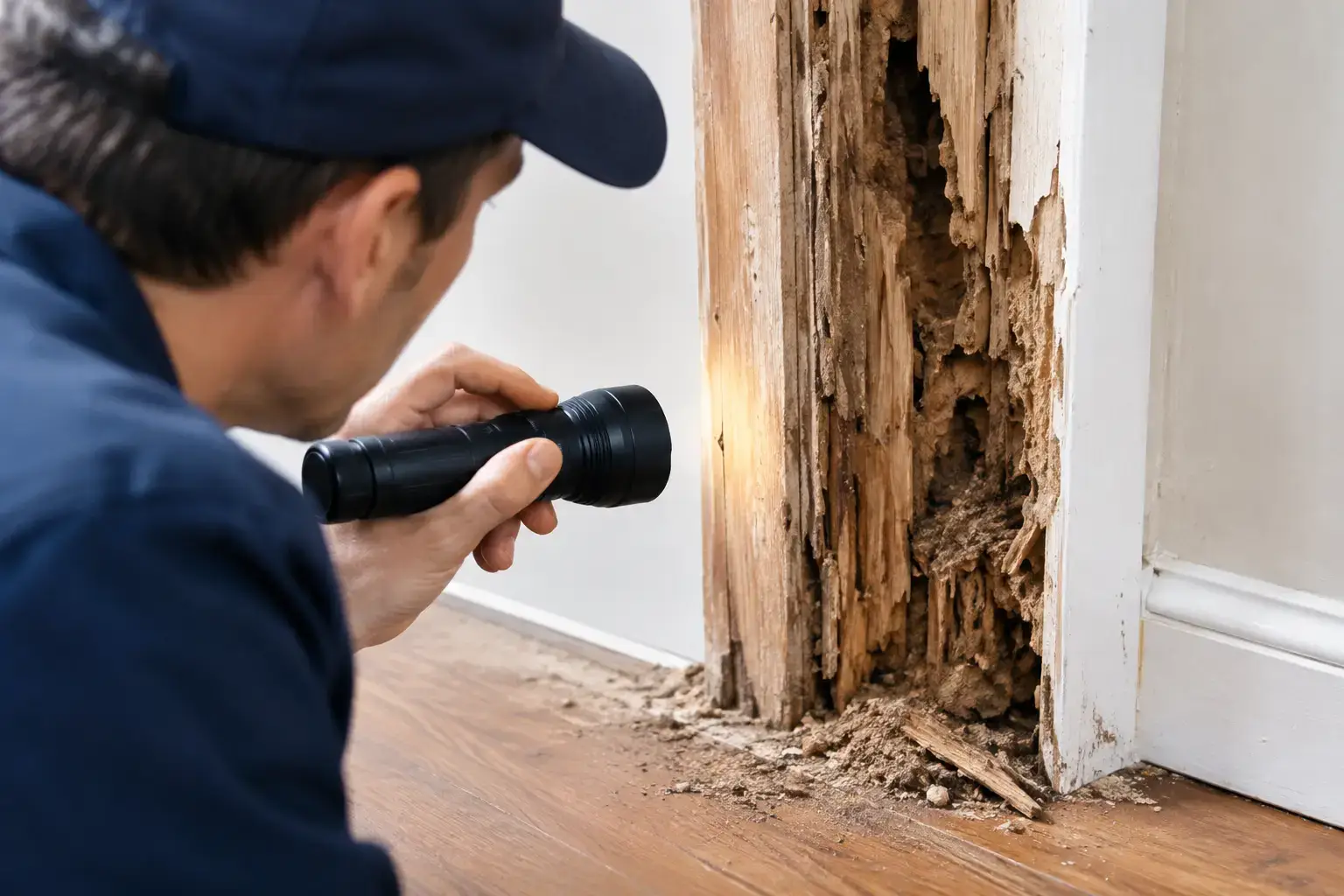
- Wood that sounds hollow or feels thin. Termites can leave a painted surface intact while consuming the wood behind it. Baseboards, window frames, door trim, attic framing, and patio structures are common trouble spots.
- Small piles of pellet-like droppings. Drywood termites push waste, called frass, out of tiny kick-out holes. The pellets can resemble sawdust, coffee grounds, or coarse sand.
- Blistering paint, cracked trim, sagging areas, or doors that suddenly stick. These symptoms do not always mean termites, but they can point to hidden moisture damage or wood damage that should be evaluated.
Not every flying insect is a termite. Flying ants are frequently mistaken for termite swarmers. Termites have straight antennae, a more uniform body shape, and four wings that are close to equal in length. Ants have bent antennae, a narrow waist, and front wings that are larger than their rear wings. A professional can confirm the difference quickly, which matters because the treatment approach is entirely different.
Why Termites Can Cause Serious Damage
A termite colony does not need to be visible to be active. Subterranean termites can enter through cracks around a foundation, utility lines, plumbing penetrations, and areas where wood contacts soil. Drywood termites can infest exposed lumber, eaves, attic framing, fascia boards, furniture, and interior wood without needing contact with the ground.
The damage is cumulative. A colony may feed slowly at first, but undetected termite activity can spread into additional areas of a property. For homeowners, that can mean costly repairs to framing, flooring, cabinets, or trim. For landlords and commercial property managers, it can also mean tenant disruptions, maintenance complaints, and damage that affects a building’s value.
The right level of urgency depends on what is found. A few old wings near an open window may not prove an active infestation. Fresh frass that keeps returning, live swarmers indoors, active mud tubes, or visibly damaged wood are stronger signs that treatment should not wait.
What to Do When You Find Possible Termites
Avoid spraying household insecticide into holes, tubes, or damaged wood. Killing a few visible insects does not eliminate the colony, and spraying may make it harder to identify where termites are active. Do not pull apart mud tubes until an inspector has had a chance to assess them. Intact tubes can provide useful evidence about termite travel paths.
Instead, take clear photos, note where and when you found the signs, and keep the area accessible. If you see swarmers indoors, collect a few in a sealed container or take a close photo for identification. Then schedule a termite inspection promptly.
If moisture is present, address the source as well. Repair leaking pipes, keep gutters and drainage directed away from the foundation, and avoid allowing sprinklers to soak siding or structural wood. Moisture control alone will not remove an established colony, but it reduces conditions that make a property more attractive to termites.
What a Professional Termite Inspection Should Cover
A thorough inspection is more than a quick look at a damaged baseboard. A licensed termite professional should examine accessible interior and exterior areas, including foundations, garages, crawl spaces, attics, utility entry points, fences, decks, eaves, and areas around moisture sources.
The goal is to determine whether the evidence is active, old, or caused by another issue such as water damage, wood-boring beetles, or carpenter ants. The inspection should also identify the likely termite type and the extent of accessible damage. That information guides the treatment plan.
No two properties have the same risk profile. A single-family home with accessible attic framing may need a different approach than a multi-unit rental, restaurant, office, or older commercial building. Customized recommendations matter because the best treatment depends on termite species, construction type, infestation location, and whether activity is isolated or widespread.
Treatment Options Depend on the Infestation
Localized treatment may be appropriate when drywood termite activity is limited to a defined, accessible area. This method targets the affected wood and can minimize disruption. However, localized treatment is not always the best choice if evidence suggests termites have spread beyond the visible area.
For broader drywood termite infestations, whole-structure fumigation may be recommended. Fumigation reaches termites throughout the structure, including hidden locations that cannot be accessed directly. It requires preparation and temporary vacancy, so it is a larger commitment, but it can be the most effective solution when the infestation is extensive.
Subterranean termites are commonly addressed with soil treatments, baiting systems, or a combination of methods. The goal is to create a protective treatment zone or eliminate the colony through targeted baiting. The best option depends on the construction of the building, termite pressure, soil access, and the location of active tubes or damage.
A responsible provider should explain the findings, outline the available options, and be clear about what treatment can and cannot address. Treatment removes or controls the termite problem, but it does not repair structural damage. If damaged wood affects load-bearing areas, a qualified contractor should evaluate repairs after termite control is underway.
Prevention Is Ongoing Property Protection
Termite prevention is most effective when it combines inspections, moisture management, and sensible maintenance. Keep mulch, firewood, lumber, cardboard, and stored wood products away from the foundation whenever possible. Maintain a visible gap between soil and exterior wood, and trim vegetation so it does not trap moisture against siding, eaves, or rooflines.
Pay attention to less obvious areas, too. Leaky outdoor faucets, clogged gutters, poorly graded soil, and drip irrigation aimed at walls can all add unwanted moisture. In rental and commercial settings, routine inspections are especially valuable because tenant turnover, landscaping changes, and maintenance work can alter termite risk over time.
For properties in Los Angeles County and Orange County, Impressive Exterminating can provide a professional inspection and a treatment plan based on the conditions at your property. Safe, effective termite control starts with an accurate diagnosis, not a one-size-fits-all recommendation.
When you find possible termite evidence, treat it as a reason to get clear answers, not a reason to panic. A timely inspection can confirm what is happening, protect the people using the property, and help preserve the structure before hidden damage has a chance to grow.