A few pellets beneath a windowsill can point to a much larger problem hidden inside a wall, attic, or wood beam. Termite fumigation is often the most dependable way to eliminate a widespread drywood termite infestation, especially when termites are active in more than one area of a property.
For homeowners, landlords, and business owners, the decision can feel urgent and disruptive. You want the termites gone, but you also need to protect your family, tenants, pets, inventory, and schedule. A professional inspection is the first step toward choosing a treatment that solves the actual problem instead of simply treating the evidence you can see.
When Is Termite Fumigation Necessary?
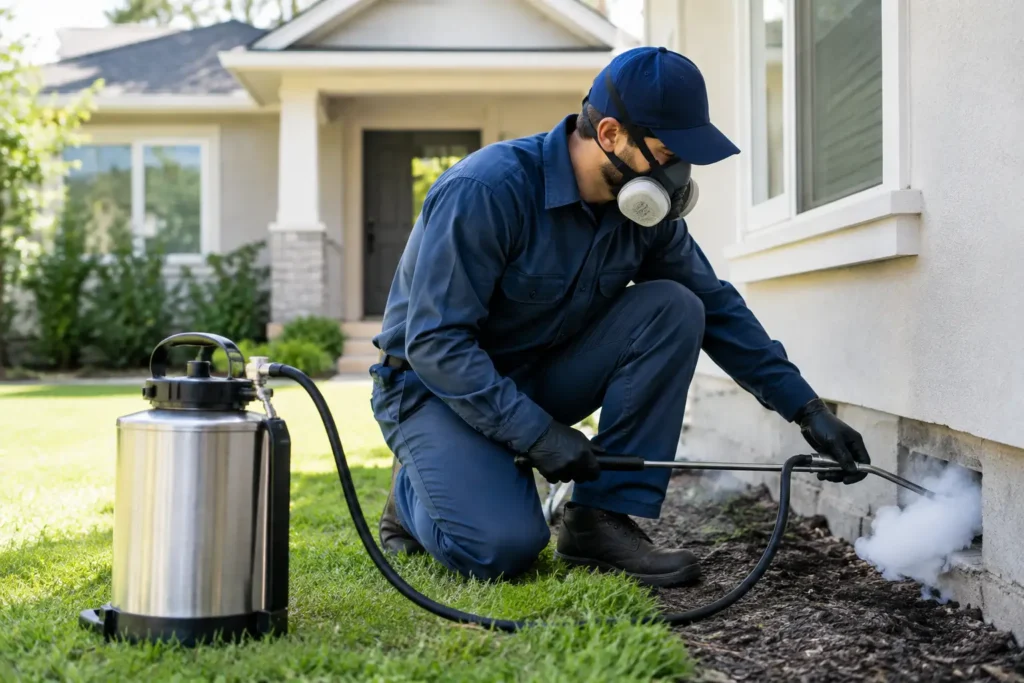
Fumigation is a whole-structure treatment. A licensed termite professional seals the building under a tent and introduces a fumigant that reaches the spaces where drywood termites live and feed. Because the gas penetrates wood and concealed voids, it can treat active colonies that are difficult or impossible to reach with localized applications.
This approach is commonly recommended when an inspection finds drywood termite activity in several parts of the building, when the infestation is in inaccessible areas, or when there is evidence that prior spot treatments did not fully resolve the issue. It may also be the practical choice for older homes with extensive wood framing, additions, attic spaces, or hidden damage.
Fumigation is not automatically the right answer for every termite issue. Subterranean termites live in soil and travel into a structure from below. Their treatment may involve soil applications, bait systems, moisture correction, and exclusion work rather than tenting. Localized drywood termite activity can sometimes be treated directly if the colony location is clear and limited. The right option depends on the termite species, the extent of activity, building construction, and your long-term goals for the property.
What Happens During Termite Fumigation?
A professional fumigation plan begins well before the tent goes up. The termite company evaluates the property, confirms the type and scope of infestation, explains the treatment recommendation, and provides detailed preparation instructions. Those instructions matter. They protect occupants and help the process go smoothly.
On the scheduled day, the crew prepares and seals the structure. The property must be vacant during treatment and for the required aeration period afterward. Once the fumigant has done its work, trained professionals aerate the building and test it before clearing it for reentry. Never return early or remove warning signs yourself. The clearance process is there to protect everyone entering the property.
The exact timeline varies based on the size and layout of the structure, weather conditions, and treatment requirements. Many residential projects require residents to make arrangements for multiple days, so advance planning is helpful. Property managers may need to coordinate access, tenant notices, parking, and communication with neighboring units if the property shares walls or has close setbacks.
Preparing Your Home, Rental, or Business
Preparation instructions should always come directly from the licensed fumigation provider, since products and treatment plans can differ. In general, expect to remove people, pets, and plants from the structure. Fish tanks require special attention, and food, medications, and other regulated items may need to be removed or secured as directed.
You may also need to open interior doors, closets, drawers, and cabinets so the fumigant can circulate appropriately. Exterior access is important, too. Crews may need clear space around the building, unlocked gates, and access to attics or crawl spaces. Let the provider know in advance about alarms, solar equipment, roof concerns, detached structures, or anything that could affect setup.
For commercial properties, preparation should account for employees, customers, stock, food products, computer equipment, records, and operating hours. A restaurant, office, warehouse, or retail location may need a coordinated schedule to reduce downtime. A good treatment plan is not just about eliminating termites. It is also about making the process manageable for the people who rely on the property.
What Fumigation Treats and What It Does Not
Fumigation is highly effective at eliminating drywood termites present in the treated structure at the time of service. Its greatest advantage is reach. It addresses active termites inside wood, walls, ceilings, and other concealed spaces without requiring the technician to locate every individual colony opening.
However, fumigation does not repair termite damage. If termites have weakened framing, fascia boards, trim, flooring, or other wood components, repairs may be needed after treatment. The treatment also does not correct the conditions that can make a property attractive to future termite activity, such as untreated exposed wood, roof leaks, plumbing leaks, wood-to-soil contact, or gaps around utility lines.
That is why a complete termite plan should include a post-treatment inspection and practical prevention steps. Depending on the property, this may mean repairing moisture issues, sealing entry points, removing wood debris near the building, maintaining clearance between soil and siding, and monitoring for new evidence of activity.
Signs You Should Schedule an Inspection Soon
Termites often work quietly, but they leave clues. Drywood termite droppings, also called frass, can look like tiny, hard pellets collecting below kick-out holes in wood. You may notice blistered paint, hollow-sounding wood, small holes in trim, damaged window frames, or wings shed by swarming termites.
Subterranean termites may leave mud tubes along foundations, walls, pipes, or crawl space supports. Because other pests and moisture problems can create similar-looking damage, it is best not to diagnose the problem based on one sign alone. A professional inspection can identify the pest, locate the activity, and explain whether fumigation, localized treatment, or another solution makes sense.
Do not wait until a small sign becomes visible damage. Termites can continue feeding behind finished surfaces long before the cost of repairs becomes obvious. Fast response is especially valuable in Southern California, where drywood termites can be a recurring concern for homes, apartments, and commercial properties.
Choosing a Termite Fumigation Provider
The lowest estimate is not always the lowest total cost. Before approving treatment, ask whether the company is licensed, what termite species was identified, why fumigation is being recommended, what preparation is required, and how reentry clearance will be handled. You should also understand whether the estimate includes inspections, the fumigation process, warranty terms, and any follow-up recommendations.
Clear communication is a sign of professional service. You should know who to contact with preparation questions, when the property will be secured, what to expect during aeration, and when you can safely return. For rental and commercial properties, a provider should be able to work with the owner or manager on a realistic coordination plan.
At Impressive Exterminating, the goal is to provide an inspection-driven recommendation that fits the infestation and the property, not a one-size-fits-all answer. Whether treatment calls for fumigation or a more targeted approach, dependable termite control starts with identifying the problem accurately and addressing it thoroughly.
If you have found pellets, wings, damaged wood, or mud tubes, treat the discovery as a reason to act, not a reason to panic. Schedule a professional inspection, get clear answers about your options, and choose a plan that protects the property now while helping prevent the next termite problem.