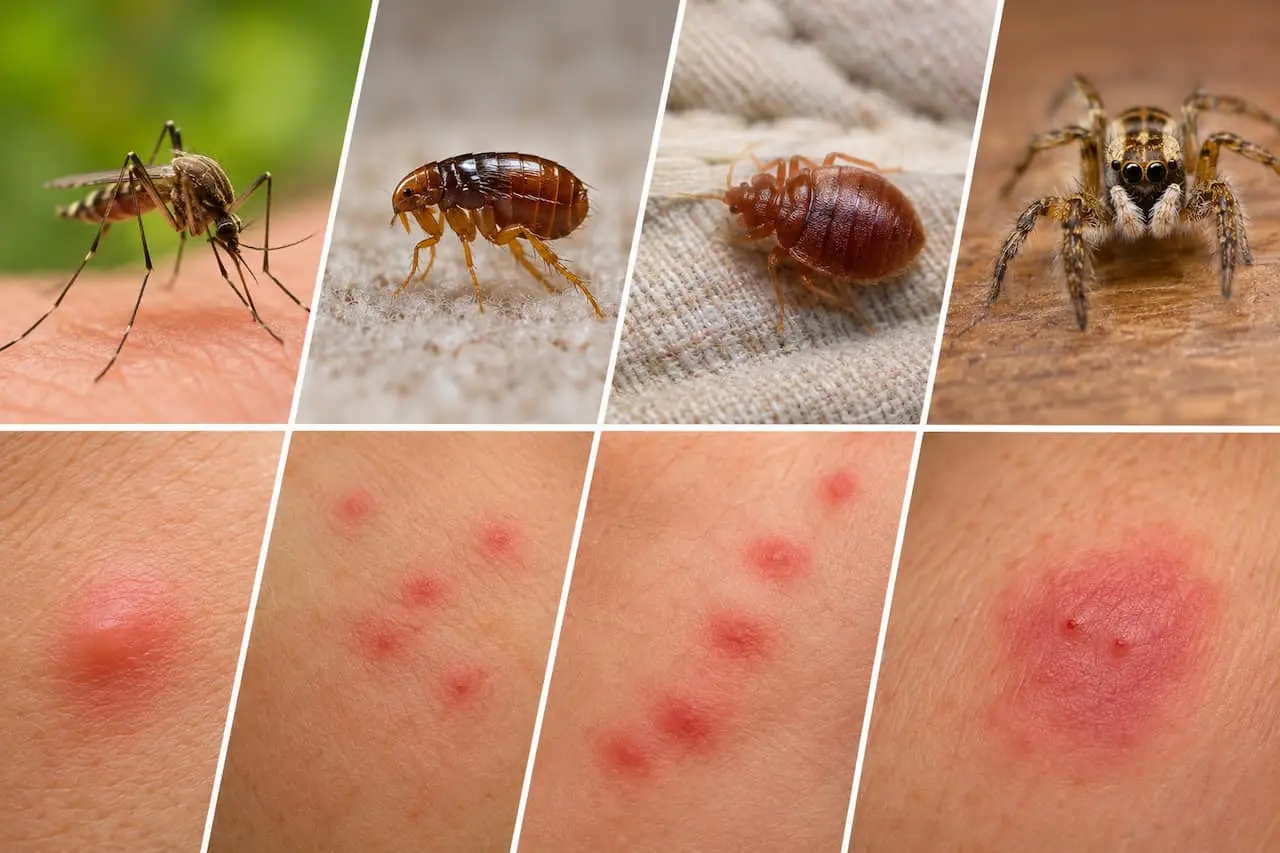
Waking up with itchy red bumps or noticing unexplained bites on your legs can be frustrating. You might assume mosquitoes are responsible, especially during warmer months. However, fleas, bed bugs, and even spiders can cause skin reactions that look surprisingly similar.
The challenge is that not every insect bite looks the same on every person. Some people develop small red bumps, while others experience significant swelling, itching, or irritation.
Understanding the differences between mosquito bites vs flea bites, bed bug bites, and spider bites can help you identify possible pest activity and decide what to investigate next.
For homeowners and renters across Los Angeles County and Orange County, identifying the source is particularly important when bites continue appearing indoors.
Quick Comparison: Mosquito Bites vs Flea, Bed Bug and Spider Bites
| Pest | Common appearance | Typical location | Common circumstances |
| Mosquitoes | Raised, itchy bumps | Exposed skin | After outdoor exposure or mosquito activity indoors |
| Fleas | Small, itchy red bumps | Ankles, feet and lower legs | Around pets, carpets and upholstered furniture |
| Bed bugs | Red, itchy bumps or clusters | Exposed skin during sleep | After spending time in an infested sleeping area |
| Spiders | Localized redness, swelling or pain | Usually a single area | After possible contact with a spider |
Important: These are general clues, not diagnostic rules. Bite appearance alone cannot reliably identify the pest responsible.
1. Mosquito Bites: Raised, Itchy Bumps on Exposed Skin
Mosquito bites commonly appear as small, raised, reddish bumps that cause itching. Some people develop larger swollen areas depending on their sensitivity to mosquito saliva.
Mosquitoes are particularly active around outdoor areas with standing water, vegetation, and shaded resting places.
Common signs of mosquito bites:
- Raised, round or slightly irregular itchy bumps.
- Redness and localized swelling.
- Bites on exposed skin, including arms, legs, neck and ankles.
- Itching that may begin shortly after being bitten.
In Southern California, mosquitoes can remain active for much of the year because of mild temperatures and regular landscape irrigation.
The invasive Aedes mosquito can also bite during daylight hours, particularly around ankles and lower legs.
Where to look for mosquito activity:
Check birdbaths, clogged gutters, flowerpot trays, buckets, outdoor drains, and other containers holding standing water.
If mosquitoes continue appearing around your property, read our guide to Mosquito Control After Rain to identify overlooked breeding locations.
2. Flea Bites: Small, Itchy Bumps Around Ankles and Legs
Flea bites are often confused with mosquito bites because both can cause red, itchy bumps.
However, flea bites commonly appear in small clusters and frequently affect the ankles, feet, and lower legs.
Fleas are wingless insects that jump between hosts and can live in carpets, pet bedding, upholstered furniture, and other areas where animals rest.
Common signs of flea bites:
- Small red or discolored bumps.
- Intense itching.
- Several bites grouped close together.
- Bites concentrated around ankles and lower legs.
- Occasionally, a small discolored ring around the bite.
Why are you getting bites on your ankles?
If you repeatedly notice itchy bites around your ankles, consider whether fleas might be present.
Check your pets for excessive scratching, flea dirt, or visible fleas. Also inspect pet bedding, rugs, carpets, and furniture.
Remember that ankle bites do not automatically mean fleas. Certain mosquito species also target the lower legs.
If you suspect an indoor pest problem but cannot identify its source, professional pest identification can help determine the appropriate treatment.
3. Bed Bug Bites: Itchy Bumps That Appear After Sleeping
If you wake up with unexplained itchy bites, bed bugs are one possibility worth investigating.
Bed bugs are small, reddish-brown insects that feed on human blood, usually while people are sleeping. They hide near sleeping areas and emerge when a suitable host is available.
Common signs associated with bed bug bites:
- Small, raised, red or swollen bumps.
- Groups of bites or occasional linear patterns.
- Itching that may develop hours or days after exposure.
- Bites on exposed areas such as arms, hands, shoulders, neck, and legs.
Bed Bug Bites vs. Mosquito Bites: What Is the Difference?
Mosquito bites commonly develop shortly after exposure and often appear as individual raised bumps.
Bed bug bites may appear in groups or lines, although this pattern is not consistent in every person.
The timing can also provide clues. Mosquitoes may bite while you are outdoors or inside your home, whereas bed bug exposure commonly occurs around sleeping areas.
Look for actual signs of bed bugs rather than relying on bites alone:
- Small dark spots around mattress seams.
- Rust-colored stains on sheets.
- Shed bed bug skins.
- Live insects around the bed frame or headboard.
- Eggs or other evidence in nearby furniture cracks.
If you are a renter dealing with possible bed bugs, our guide to Bed Bugs in Apartments: What LA & OC Renters Need to Know explains what to look for and what steps to take.
For recurring activity, professional Bed Bug Control can help identify and address an infestation.
4. Spider Bites: Localized Redness, Swelling or Pain
Spider bites are often blamed for unexplained skin marks, but many suspected spider bites are actually caused by other insects or skin conditions.
Most spiders do not actively seek out people. Bites generally occur when a spider is trapped against the skin or accidentally disturbed.
Possible signs of a spider bite include:
- Localized redness or swelling.
- Pain, burning, or tenderness.
- Itching around the affected area.
- Occasionally, more serious symptoms depending on the spider species.
A single swollen bump does not automatically indicate a spider bite. Even two small marks should not be considered definitive proof.
In Southern California, homeowners should also be aware of black widow spiders, which may hide in garages, storage areas, outdoor furniture, and cluttered spaces.
Learn more in our guide to Black Widow Spiders in Southern California: Where They Hide Around Your Home.
If you notice recurring spider activity around your property, professional Spider Control can help identify problem areas and reduce conditions that attract spiders.
Why Do I Have Itchy Bites at Night?
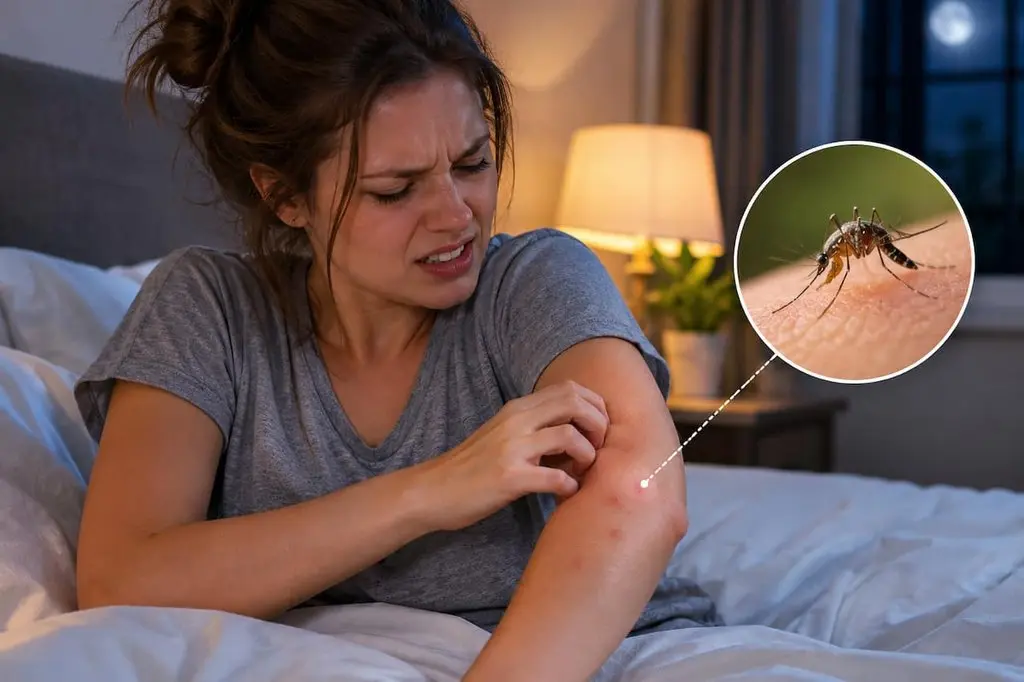
Noticing new itchy bumps in the morning does not automatically mean you have bed bugs.
Several pests can cause nighttime bites or skin reactions that become noticeable after sleeping.
Here are some possibilities:
Bed bugs: They commonly feed while people are sleeping and hide near beds, mattresses, and furniture.
Fleas: They may remain active indoors, particularly where pets rest or carpets provide suitable hiding places.
Mosquitoes: They can enter homes through open doors, windows, or damaged screens and bite people overnight.
Other causes: Skin irritation, allergic reactions, and certain skin conditions can also produce bumps that resemble insect bites.
If you keep finding new bites, inspect your sleeping area, check pets for fleas, and look for mosquito activity around windows and doors.
Avoid applying pesticides to your skin or using household insecticides on mattresses unless the product label specifically permits that application.
What Should You Do If You Cannot Identify What Is Biting You?
When bites continue appearing, the most effective approach is to investigate the source rather than repeatedly treating the skin.
Follow these practical steps:
1. Record when new bites appear.
Note whether you notice them after sleeping, spending time outdoors, or sitting on carpets and upholstered furniture.
2. Inspect your sleeping area.
Check mattress seams, bed frames, headboards, and nearby furniture for signs of bed bugs.
3. Examine your pets.
Look for excessive scratching, fleas, and flea dirt. Check pet bedding and the areas where animals spend time.
4. Check your yard and outdoor spaces.
Remove standing water, inspect shaded areas, and check around gutters, drains, and landscaping for mosquito activity.
5. Avoid guessing and using random treatments.
Different pests require different control methods. Treating the wrong pest can waste money and allow the underlying problem to continue.
6. Arrange a professional inspection if activity continues.
If you cannot identify the source or keep experiencing unexplained bites, a professional inspection can help determine which pests are present and what treatment is appropriate.
When Should You Seek Medical Attention?
Most ordinary insect bites can be managed with basic first aid, but some reactions require medical attention.
Wash the affected area with soap and water, apply a cold compress, and avoid scratching.
Seek medical advice if you notice:
- Increasing redness, warmth, or swelling.
- Pus or other signs of infection.
- Fever or worsening symptoms.
- Severe or persistent pain.
- An unusual or spreading skin reaction.
Seek emergency medical attention if you experience difficulty breathing, swelling of the face or throat, faintness, or other signs of a severe allergic reaction.
Do not assume a painful or worsening skin lesion is a spider bite. A healthcare professional should evaluate concerning symptoms.
Professional Pest Control for Homes in Los Angeles and Orange County
Identifying the source of unexplained bites is the first step toward protecting your home and family.
At Impressive Exterminating Pest Control, we provide professional pest control solutions for residential and commercial properties throughout Los Angeles County and Orange County.
Whether you are dealing with mosquitoes around your backyard, suspected bed bugs near your mattress, or recurring spider activity, identifying the pest and its hiding places is essential for choosing the right treatment.
Our approach focuses on inspection, pest identification, targeted treatment, and prevention.
If you are experiencing recurring pest activity, contact Impressive Exterminating Pest Control to request a free inspection and discuss the right solution for your property.
Frequently Asked Questions
1. How can I tell the difference between mosquito bites and flea bites?
Mosquito bites typically appear as raised, itchy bumps on exposed skin. Flea bites are often smaller and appear in clusters, particularly around ankles, feet, and lower legs. However, bite appearance alone cannot confirm which pest is responsible.
2. What is biting me if I wake up with itchy bumps?
Bed bugs are one possibility, especially if you find evidence around your mattress or bed frame. However, fleas, mosquitoes, and other causes of skin irritation can produce similar symptoms. Inspect your sleeping area and surrounding environment before assuming you have bed bugs.
3. Are bed bug bites always in a straight line?
No. Bed bug bites can appear in lines, clusters, or irregular patterns. Some people develop no visible reaction at all. Finding bed bugs or their physical evidence is more reliable than relying on bite patterns.
4. Why do I have bug bites on my ankles?
Fleas commonly bite around the ankles and lower legs because they jump from carpets, flooring, and nearby surfaces. However, certain mosquitoes also target ankles, so inspect both indoor and outdoor areas.
5. Can mosquito bites look like bed bug bites?
Yes. Both can cause raised, red, itchy bumps. Mosquito bites often appear individually, while bed bug bites may occur in groups or lines. These differences are only general clues, not reliable identification methods.
6. Do spider bites usually have two puncture marks?
Not necessarily. Two visible puncture marks are not a reliable way to identify a spider bite. Many suspected spider bites have other causes, and a healthcare professional should evaluate unusual or worsening skin reactions.
7. How do I know if I have fleas or bed bugs in my home?
Check your carpets, pet bedding, and upholstered furniture for flea activity. For bed bugs, inspect mattress seams, bed frames, headboards, and nearby furniture for live insects, shed skins, eggs, or dark spotting.
8. When should I call a professional pest control company?
Contact a pest control professional when bites continue appearing, you discover signs of an infestation, or you cannot identify the source of pest activity. An inspection can help determine the pest involved and the appropriate treatment.
Protect your home from unwanted pests. Contact Impressive Exterminating Pest Control for professional pest inspection and targeted solutions across Los Angeles County and Orange County.