A pencil-thin mud tube along a foundation or a soft spot near a window can point to a much larger problem behind the wall. Effective termite treatment is not just about killing the termites you can see. It is about finding the colony activity, protecting vulnerable wood, and preventing damage from continuing after the initial service.
For homeowners, landlords, and business owners, termites are especially stressful because the damage can build quietly. By the time a door frame feels hollow or paint begins to bubble, termites may have been feeding for months. Fast action matters, but the right method matters just as much.
Why a Professional Termite Inspection Comes First
Termites do not all behave the same way, and treatment should never be selected by guesswork. A professional inspection identifies the species, the location of activity, likely entry points, moisture conditions, and the extent of visible damage. This allows the technician to recommend a plan based on the property rather than a one-size-fits-all answer.
In Southern California, subterranean termites and drywood termites are common concerns. Subterranean termites live in soil and travel into structures through concealed tunnels. They often enter near foundations, plumbing penetrations, patios, and areas where soil or mulch touches siding. Drywood termites live directly inside dry wood, including framing, eaves, fascia boards, furniture, and attic structures.
A careful inspection also looks for conditions that make a building easier to invade. Leaking pipes, poor drainage, wood-to-soil contact, unsealed utility openings, and damp crawl spaces can all increase risk. Treating active termites without addressing these contributing factors may leave the property exposed to another infestation.
Termite Treatment Options Depend on the Infestation
The best termite treatment depends on where termites are active, how widespread the infestation is, the type of termite involved, and the construction of the property. A responsible provider explains the choices clearly, including what each approach can and cannot do.
Localized Treatment for Targeted Activity
When drywood termite activity is limited to a defined area, localized treatment may be an appropriate option. The technician treats the affected wood through carefully placed access points or applies targeted products to reach termites within galleries.
Localized service can be less disruptive than whole-structure fumigation and may be a practical choice when an infestation is caught early. However, it is not automatically the right answer for every drywood termite problem. If activity exists in multiple inaccessible areas, treating only visible signs may not reach all affected wood.
Soil Treatments and Barrier Protection
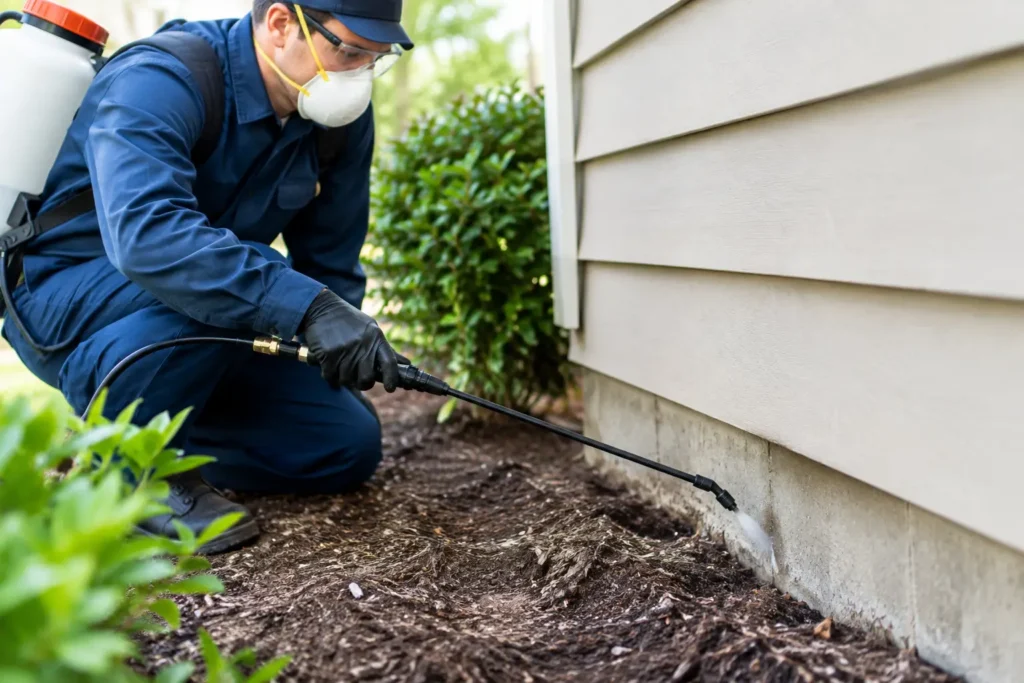
Subterranean termite control often involves treating soil around the structure or at specific entry points. The goal is to create a treated zone that termites cannot easily cross while moving between the ground and the building. In some situations, treatment may also be applied in crawl spaces, along slabs, or around utility penetrations.
This approach is designed around the property layout and the source of termite access. Concrete, landscaping, additions, and plumbing can affect where treatment is placed, which is why detailed inspection and professional application are essential.
Bait Systems for Ongoing Monitoring
Termite bait systems can be used to monitor for subterranean termite activity and help reduce colony pressure over time. Stations are placed in the ground around the property and inspected on a scheduled basis. When termites feed in a station, a bait material can be introduced to affect the colony.
Baiting is often valuable for properties that need long-term monitoring or where a lower-disruption strategy is preferred. It is not always the fastest solution for active structural damage, and it requires consistent professional follow-up. For many properties, it works best as part of a larger termite prevention plan.
Fumigation for Widespread Drywood Termites
Whole-structure fumigation is commonly recommended when drywood termite activity is widespread, difficult to access, or found in several areas of a home or building. During fumigation, the structure is enclosed and a fumigant is used to eliminate drywood termites throughout the building.
Fumigation is highly effective for the infestation present at the time of service, but it does not create a lasting barrier against future termites. It also requires preparation, temporary vacancy, and coordination for pets, plants, food items, and building access. For a heavily infested structure, that short-term inconvenience can be the most reliable path to protecting the property.
What Termite Treatment Should Include
A quality service plan should feel specific to your property, not rushed or vague. Before treatment begins, you should understand the findings, the recommended method, preparation requirements, and the next steps for monitoring or repairs.
The work should address active termites while also identifying conditions that support future infestations. That may include recommending repairs to moisture-damaged wood, correcting drainage, removing wood debris near the structure, or sealing obvious points of entry. Pest control and property maintenance work together here. Treatment controls the infestation, while repairs and prevention reduce the chances of termites returning.
After service, follow-up matters. Depending on the type of treatment, a technician may inspect treated areas, check bait stations, monitor for fresh mud tubes, or review whether repairs have been completed. Ongoing attention is particularly valuable for rental properties and commercial sites, where new termite signs can be missed until they become a tenant complaint or costly maintenance issue.
Signs You Should Schedule an Inspection Now
Termites are not always visible, but a few warning signs deserve prompt attention. Mud tubes on exterior walls or foundations are a common sign of subterranean termites. Small piles of pellet-like droppings near trim, windows, or attic areas can indicate drywood termite activity. Swarmers, discarded wings, hollow-sounding wood, bubbling paint, and doors that suddenly stick can also signal an issue.
Do not assume a small sign means a small infestation. One discarded wing or a short mud tube does not reveal how far activity has spread. A professional inspection provides answers before the damage grows.
Prevention Between Professional Visits
There is no single homeowner task that guarantees termite prevention, but reducing moisture and wood contact around the structure makes a meaningful difference. Keep gutters and downspouts directing water away from the foundation. Repair plumbing leaks quickly, especially under sinks, in bathrooms, and around water heaters. Keep firewood, lumber, cardboard, and wood debris away from the exterior walls.
Trim shrubs and tree branches so they do not trap moisture against siding or rooflines. Avoid piling mulch directly against the foundation, and do not allow soil to cover weep holes or reach wood siding. In crawl spaces, adequate ventilation and moisture control can help make the area less attractive to termites.
For property managers, prevention also includes communication. Ask tenants to report leaking faucets, damaged baseboards, swarmers, or unusual wood damage right away. Small maintenance reports can provide an early warning that saves a major repair later.
Choose a Termite Partner Focused on Long-Term Protection
Termite work should bring clarity, not more stress. The right provider explains what was found, recommends the appropriate treatment, handles the work safely, and remains available when follow-up is needed. This is especially important when children, pets, tenants, employees, or customers are part of the property.
Impressive Exterminating provides inspection-driven termite service for residential and commercial properties across Los Angeles County and Orange County, with treatment plans designed around the infestation and the building. Whether the concern is active mud tubes, drywood termite droppings, or preventive protection after a previous problem, a prompt inspection is the best place to start.
Termites work out of sight, but protecting your property does not have to be complicated. If you have noticed a warning sign or simply want reassurance before damage spreads, schedule a professional inspection while the problem is still manageable.