
You usually do not see termites first. You notice the damage – bubbling paint, hollow-sounding wood, tight-fitting doors, or tiny piles that should not be there. That is why termite treatment options explained in plain English matters so much. The right treatment can stop active damage, protect the structure, and help you avoid paying for a bigger repair later.
For property owners in Southern California, the real question is not whether termite treatment exists. It is which option fits your building, infestation level, timeline, and budget. Some treatments work best for localized drywood termite activity. Others are better for widespread infestations, subterranean termites, or properties that need long-term monitoring.
Termite treatment options explained for real properties
Not every termite problem is the same, and that is where many people get frustrated. A small, isolated issue in one section of trim does not call for the same approach as termites spread through an attic, crawl space, or multiple units in a rental property. A licensed inspection should identify the termite species, where the activity is happening, how accessible the damaged areas are, and whether the infestation looks localized or established.
In Southern California, drywood termites are common, but subterranean termites also cause serious structural issues. The treatment plan depends heavily on which one is present. If that part is guessed wrong, the treatment may not solve the actual problem.
Localized termite treatments
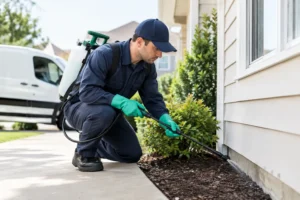
Localized or spot treatment is often the first option people ask about because it can be less disruptive and more affordable than whole-structure service. This method targets specific areas where termite activity has been confirmed. A technician may drill into affected wood or wall voids and apply termiticides or foam products designed to reach the galleries where termites are active.
This can be an effective solution when the infestation is clearly limited and the affected zones are accessible. For example, one window frame, a section of fascia, or a single wall area with identified drywood termite activity may be a good candidate. It is also appealing to homeowners and business owners who want a fast response without tenting the entire property.
The trade-off is simple. Spot treatment treats known activity, not necessarily hidden activity elsewhere. If termites are present in more than one area and those areas are not detected during inspection, a localized treatment may leave part of the problem behind. That does not make spot treatment bad. It just means it works best when the infestation is genuinely limited.
When spot treatment makes sense
Spot treatment is often a strong fit for early detection, smaller infestations, and properties where termite evidence is confined to a specific location. It may also make sense when a property owner needs a practical short-term solution while planning repairs or additional work.
That said, if pellets, damaged wood, or swarm evidence are showing up in multiple rooms, multiple units, or over time, it is worth looking at broader treatment options instead of chasing termites from one area to the next.
Whole-structure fumigation
When people think of termite control, they often think of tenting. Whole-structure fumigation is commonly used for widespread drywood termite infestations because it reaches areas that are otherwise difficult or impossible to access. The structure is enclosed, and a fumigant is introduced to eliminate termites throughout the building.
The major advantage is reach. Fumigation does not depend on finding every single hidden pocket of activity inside wood framing, ceiling voids, trim, or inaccessible spaces. If drywood termites are spread throughout the property, this is often the most complete treatment.
The downside is that fumigation is not a residual treatment. It eliminates the existing infestation, but it does not create lasting protection against future termite activity after the fumigation is complete. There is also the inconvenience factor. Occupants, pets, and certain items must be prepared properly, and the property will be unavailable for a period of time.
For many homeowners, landlords, and commercial property managers, fumigation is the right call when the infestation is extensive, repeated, or hard to isolate. It can feel like a big step, but delaying broad treatment on a broad infestation often leads to more damage and more expense.
Soil treatments for subterranean termites
Subterranean termites behave differently from drywood termites, so treatment has to match the species. These termites live in the soil and travel into the structure through mud tubes or hidden entry points. In these cases, soil-applied liquid termiticides are a common and highly effective treatment option.
A technician treats the soil around the foundation, and in some cases drills through slabs, patios, or adjacent areas to create a treated zone. The goal is to block termite entry and eliminate active foraging termites as they move between the colony and the structure.
This option is often preferred for subterranean infestations because it provides more than a one-time contact kill. Depending on the product and installation conditions, it can offer ongoing protection. For homes and commercial buildings with known subterranean termite pressure, that long-term defensive barrier matters.
The main variable is access. Foundation type, landscaping, hardscape, and structural design can all affect how straightforward the treatment is. That is one reason a detailed inspection matters before anyone gives a price or recommendation.
Bait systems and monitoring
Bait systems are another option, especially for subterranean termites and for properties where ongoing monitoring is part of the plan. Stations are placed around the property and checked regularly. When termites feed on the bait, they carry it back to the colony, which can help suppress or eliminate it over time.
This approach is attractive for customers who want a lower-impact method and continued oversight rather than a one-and-done visit. It can be useful for homes, multifamily properties, and commercial sites that need ongoing termite vigilance.
Baiting does require patience. It is not always the fastest answer for a serious active infestation that is already causing visible damage. In many cases, baiting works best as part of a broader termite management strategy rather than as the only tool in a high-pressure situation.
Why monitoring matters after treatment
Termites do not announce a return. Regular follow-up inspections help catch new activity early, before the damage becomes extensive. For landlords and business owners especially, monitoring can be the difference between a manageable issue and a tenant or operational headache.
Wood treatment and borate applications
In some cases, exposed wood can be treated directly with borate-based products. These treatments penetrate the wood and help protect it from termite activity. They are often used during construction, remodeling, repairs, or when damaged wood is being replaced.
This is a solid preventive option, but it is not a standalone answer for every active infestation. If termites are already hidden deep in inaccessible areas or spread across the structure, borate treatment alone may not be enough. Where it shines is in added protection – especially when combined with repairs and a broader treatment plan.
What determines the best termite treatment?
The best treatment is the one that matches the actual infestation, not the one that sounds easiest. Species matters. Extent of activity matters. Accessibility matters. So does whether the goal is immediate elimination, long-term prevention, or both.
Budget matters too, and any honest provider should say that. A lower-cost spot treatment may be completely appropriate for one property and a poor value for another if it only delays a larger fix. On the other hand, recommending whole-structure fumigation for every termite call is not practical either. Good termite control is not one-size-fits-all.
For families, safety is naturally a top concern. For property managers, speed and tenant coordination are often just as urgent. For business owners, downtime can be costly. A strong service plan should account for those realities while still solving the underlying termite issue.
Choosing a termite company with confidence
A termite treatment is only as good as the inspection and application behind it. Look for a licensed professional who can explain what they found, what species they suspect or confirmed, why they are recommending a specific treatment, and what that treatment will and will not do. Clear answers matter.
This is especially important if you are comparing estimates. One quote may cover spot treatment only, while another includes broader service, monitoring, or repairs coordination. If the scope is not clear, the price comparison is not really apples to apples.
At Impressive Exterminating, the focus is on safe, effective treatment plans built around the property in front of us, not a canned recommendation. That means fast response when termites are active and practical prevention strategies that help reduce future risk.
If you suspect termite activity, the best next step is not guessing which treatment sounds best online. It is getting a professional inspection that shows exactly what you are dealing with and what will solve it with the least disruption and the most protection.