
You usually find out you have termites after the damage has already started – blistered paint, hollow-sounding wood, sagging trim, or a swarm near a window that was not there yesterday. At that point, the question becomes practical fast: termite spot treatment versus fumigation. Which option actually solves the problem, how disruptive is it, and when does paying less upfront end up costing more later?
For homeowners, landlords, and business owners across Los Angeles County and Orange County, the right answer depends on one thing more than anything else: how far the infestation has spread. Both treatments can be effective. The mistake is assuming they are interchangeable.
Termite spot treatment versus fumigation: the real difference
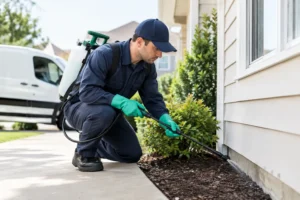
Spot treatment is targeted. It focuses on known areas of termite activity, usually where a technician can identify active damage, entry points, or localized colonies inside wood or wall voids. Depending on the structure and termite species, treatment may involve drilling, injecting termiticide, applying foam, or treating exposed wood directly.
Fumigation is whole-structure treatment. The building is sealed, covered, and filled with a fumigant that penetrates throughout the structure. Its purpose is to eliminate drywood termites wherever they are hiding, including areas that cannot be reached through local treatment.
That difference matters because termites do not always stay where you first notice them. What looks like one damaged window frame may be part of a larger drywood termite problem inside attic framing, eaves, fascia boards, or wall studs.
When spot treatment makes sense
Spot treatment is often the better choice when the infestation is clearly limited and accessible. If termite activity is confined to one or two isolated areas, and a licensed inspection supports that conclusion, local treatment can be a smart, cost-conscious solution.
This approach is attractive for a reason. It is usually less expensive than fumigation, less disruptive, and faster to complete. In many cases, occupants do not need to leave the property for multiple days. That can be a major benefit for families, tenants, and businesses that want to avoid downtime.
Spot treatment also fits situations where a property owner wants to address a known issue without treating the entire building. For example, if termites are found in a specific door frame, exposed beam, or garage trim board, local treatment may be all that is needed.
The trade-off is coverage. Spot treatment addresses the areas that are found and treated. It does not automatically eliminate hidden termite activity elsewhere in the structure. If the inspection misses additional colonies, or if termites are active in other inaccessible areas, the problem can continue quietly after the treated section looks resolved.
That is why accurate inspection matters so much. Spot treatment works best when the infestation is genuinely contained, not when it only appears contained.
Best-case scenarios for spot treatment
Spot treatment tends to work well in early-stage infestations, isolated drywood termite activity, and situations where damaged wood can be clearly identified and treated directly. It can also make sense when there is a repair plan in place and the goal is to eliminate active termites before replacing affected material.
For some commercial properties and rental units, targeted treatment may also be the more practical short-term option if access, scheduling, or vacancy is limited. But that decision should be made carefully, not just for convenience.
When fumigation is the better answer
Fumigation is usually recommended when termite activity is widespread, difficult to trace, or found in multiple areas of a structure. If termites are present in several rooms, attic spaces, structural wood, or places that cannot be opened and treated effectively, whole-structure fumigation often gives the most reliable result.
This is especially true for drywood termites, which are common in Southern California. Unlike subterranean termites, drywood termites live inside the wood they are eating. They do not need contact with soil, and they can establish small colonies in scattered parts of a building. That makes them harder to track with precision.
A localized treatment may kill the termites you can see. Fumigation is designed to reach the ones you cannot.
For older homes, multi-unit properties, and buildings with recurring drywood termite issues, fumigation often provides more complete control. It is also the stronger option when a property owner wants the highest level of confidence that hidden infestations have been eliminated throughout the structure.
The trade-off here is disruption. Occupants must leave during the fumigation process, food and certain items need to be handled properly, and the building will be unavailable for a period of time. There is also a higher upfront cost compared to many spot treatments.
Still, for the right infestation, fumigation can be the more cost-effective choice in the long run. Paying for repeated local treatments while termites continue spreading behind walls is rarely a savings.
Cost is important, but it is not the first question
A lot of property owners start with price, and that is understandable. But termite treatment should be matched to the infestation, not just the budget.
Spot treatment usually has the lower initial price because it targets a smaller area and takes less preparation. Fumigation typically costs more because it treats the entire structure and involves more labor, logistics, and temporary relocation.
The problem with comparing price alone is that it leaves out risk. A lower-cost local treatment is only a better value if it actually solves the full problem. If hidden termite activity remains and more damage develops, the later repair costs can outweigh what was saved upfront.
On the other hand, fumigation is not automatically the right answer for every termite issue either. If a trained professional confirms that the infestation is isolated, recommending full-structure treatment when local treatment would work is not customer-first service.
The right company should explain what was found, what was not found, and why a specific treatment plan makes sense for your property.
Termite spot treatment versus fumigation for Southern California properties
In Los Angeles, Long Beach, and Orange County, drywood termites are a frequent concern because of the climate and the age of many homes and commercial buildings. That local reality is one reason fumigation comes up so often in termite conversations here.
Many Southern California properties have enclosed framing, decorative wood details, attic spaces, and older exterior trim that create ideal hiding places. By the time visible signs appear, termites may already be active in more than one location.
That does not mean every structure needs fumigation. It does mean inspections should be thorough and realistic. If you own a rental property, manage a multi-unit building, or operate a business where structural issues can affect tenants or customers, it is worth being cautious about under-treating a widespread infestation.
A family-owned company like Impressive Exterminating understands that most customers are not looking for the biggest treatment. They are looking for the right one – fast, safe, effective, and based on what is actually happening in the structure.
How to decide with confidence
A good termite decision usually comes down to four factors: the extent of activity, the termite species involved, how accessible the affected areas are, and your tolerance for risk and disruption.
If termites are isolated, visible, and supported by a clear inspection, spot treatment may be the efficient path. If activity is scattered, recurring, or hidden in multiple areas, fumigation is often the more dependable option.
It also helps to think beyond treatment day. Are you planning to sell the property? Are you trying to protect tenants from future surprises? Do you need a stronger reset because the infestation may have been active for a long time? Those factors can shift the decision.
The best pest professionals will not push a one-size-fits-all answer. They will inspect carefully, explain plainly, and recommend a treatment plan that balances effectiveness, safety, cost, and long-term protection.
What happens after treatment matters too
Whether you choose spot treatment or fumigation, termite control should not end the day the active infestation is addressed. Post-treatment follow-up, repair recommendations, and ongoing monitoring all matter.
Termites are persistent, and Southern California properties stay vulnerable if conditions are right. Damaged wood, moisture issues, untreated entry points, and missed maintenance can all lead to future activity. That is why long-term prevention matters just as much as immediate elimination.
If you are weighing termite spot treatment versus fumigation, do not focus only on the treatment itself. Focus on the quality of the inspection and the honesty of the recommendation. The right plan should fit the structure, the level of infestation, and the outcome you actually want: dependable protection without unnecessary stress.
The best next step is not guessing which treatment sounds easier. It is getting a professional inspection that gives you a clear picture of the problem, so you can fix it once and move forward with confidence.