You killed a few roaches, set out some bait, and thought the problem was over – then one darts across the kitchen floor a week later. That is usually the moment people realize how to stop cockroaches returning is a different job than simply killing the ones they can see. Lasting control comes from cutting off food, water, hiding spots, and entry points at the same time.
In Southern California, roaches are persistent because our climate gives them plenty of chances to survive year-round. Apartments, restaurants, single-family homes, offices, and retail spaces can all deal with repeat activity, especially when nearby units, plumbing lines, trash areas, or shared walls give roaches an easy path back inside. If you want real results, the focus has to shift from quick sprays to complete prevention.
Why cockroaches keep coming back
Roaches return for one simple reason – the conditions that attracted them were never fully removed. A treatment may knock down active insects, but if there is still moisture under the sink, grease around the stove, crumbs under appliances, or gaps around pipes, the property remains inviting.
This is also why do-it-yourself treatments often feel inconsistent. Some over-the-counter sprays kill on contact, but they can scatter roaches deeper into walls, cabinets, or neighboring units. In multi-family housing and commercial buildings, that can make the issue feel random when it is really ongoing movement between connected spaces.
There is also the egg problem. German cockroaches, one of the most common indoor roach species in Los Angeles County and Orange County, reproduce quickly. If the adults are hit but egg cases remain protected in cracks and hidden harborage areas, the infestation starts over.
How to stop cockroaches returning for good
The most effective approach is integrated pest control – a combination of sanitation, exclusion, moisture reduction, monitoring, and targeted treatment. No single step does all the work. The strength comes from doing the basics thoroughly and keeping them consistent.
Remove food sources they rely on
Roaches do not need much to survive. A few crumbs under a toaster, a sticky spill behind the trash can, pet food left out overnight, or grease buildup along a backsplash can support ongoing activity. Kitchens get the most attention, but break rooms, garages, storage rooms, and utility areas matter too.
Store dry goods in sealed containers when possible. Wipe counters nightly, clean under small appliances, and vacuum edges where crumbs collect. Trash should be bagged, closed, and taken out regularly. If you manage a rental or commercial property, consistent cleaning standards matter more than occasional deep cleaning.
That said, cleanliness alone is not always enough. Roaches will still live in very clean buildings if they can find water and shelter. Good sanitation reduces pressure, but it works best as part of a larger plan.
Fix moisture issues fast
Roaches are strongly drawn to water, which is why they often show up under sinks, behind refrigerators, around dishwashers, in bathrooms, and near laundry areas. Even a slow drip can support a recurring problem.
Check supply lines, shut-off valves, garbage disposals, and faucet bases for leaks. Look for condensation around plumbing and appliances. In some homes and commercial spaces, poor ventilation keeps humidity high enough to help roaches settle in. Drying out those areas makes a big difference, especially in tight cabinet spaces and utility rooms where activity often starts unnoticed.
If you keep seeing roaches in the same room after treatment, moisture is one of the first things to investigate.
Seal cracks, gaps, and entry points
If there is a gap, roaches will use it. Small openings around plumbing penetrations, baseboards, cabinet seams, wall voids, door sweeps, and window frames can all serve as highways. In attached housing, they may travel from one unit to another through shared utility lines.
Use caulk or sealant around pipe openings under sinks and behind toilets. Repair torn screens and install tight-fitting door sweeps. Pay close attention to gaps where walls meet counters or cabinets, because those narrow protected spaces make ideal hiding spots.
This step is where prevention starts to become long-term. Killing active roaches matters, but stopping the next wave from entering is what changes the outcome.
The treatment mistake that leads to repeat infestations
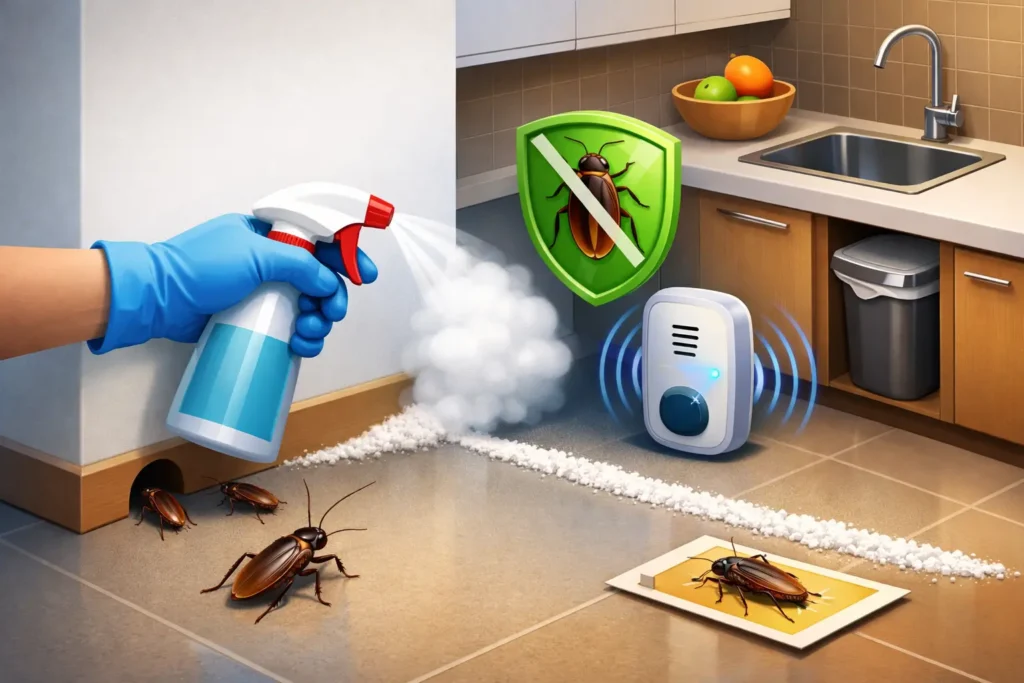
A common mistake is relying too heavily on aerosol sprays. They may give immediate satisfaction, but they rarely solve the full infestation. In some cases, they contaminate bait placements, reduce treatment effectiveness, and push roaches deeper into inaccessible areas.
Professional treatment is usually more strategic. Depending on the species and severity, that may involve baiting, growth regulators, targeted crack-and-crevice applications, dusts in voids, and monitoring devices to track hot spots. The goal is not just fast knockdown, but interruption of the breeding cycle.
There is a trade-off here. DIY products can be cheaper upfront, and for a very minor isolated issue they may help. But if you are seeing roaches during the day, spotting them in multiple rooms, finding droppings, or dealing with recurring activity in a multi-unit property, the hidden population is usually larger than it appears.
Where recurring roach problems usually start
Roaches prefer tight, dark, warm spaces close to food and moisture. In homes, that often means behind refrigerators, stoves, and dishwashers, under sinks, inside cabinet hinges, around water heater closets, and in garage storage. In commercial properties, break rooms, kitchens, janitorial closets, floor drains, and dumpster areas are common sources.
Property managers should pay special attention to turnover periods. A vacant unit with leftover food debris, plumbing leaks, or unsealed wall gaps can become a source that spreads activity into occupied spaces nearby. Business owners should look at receiving areas and storage rooms too, since cardboard, clutter, and deliveries can introduce or shelter roaches.
If you only treat where you saw one or two insects, you may miss the actual nesting areas.
Ongoing prevention matters more than one-time cleanup
If you are serious about how to stop cockroaches returning, consistency is what keeps the property protected. Roach pressure changes with weather, neighboring activity, sanitation breakdowns, and building conditions. That is why one-time treatment can solve some problems, while others need ongoing maintenance.
For families, routine prevention means less stress and lower risk of a larger infestation later. For landlords and property managers, it helps protect units, reduce tenant complaints, and avoid repeated emergency calls. For restaurants, offices, and retail spaces, it protects reputation as much as the building itself.
A recurring pest control plan can be especially valuable when the property has a history of roach activity, nearby food service, shared walls, older plumbing, or heavy foot traffic. Regular inspection and monitoring catch small issues before they turn into another major problem.
When to call a professional roach exterminator
If the issue keeps coming back after cleaning and store-bought treatment, that is a strong sign the infestation is established beyond what is visible. You should also call for help if you are seeing baby roaches, finding activity during the day, noticing a musty odor in cabinets, or managing a property where tenants or customers are affected.
A licensed professional can identify the species, locate harborage zones, choose the right treatment method, and build a prevention plan around the property. That matters because the right solution for a single-family home may not be the right solution for a restaurant kitchen, a warehouse break room, or a multi-unit apartment building.
At Impressive Exterminating, the focus is not just getting rid of the current infestation, but helping customers protect their homes and businesses from repeat pest pressure with safe, effective, and dependable service.
Cockroach control works best when you stop treating the sighting and start treating the conditions. Once food, water, shelter, and access are taken away – and the hidden population is properly addressed – the problem becomes much easier to keep from coming back.