
A spray that clears out pests but leaves you worrying about your kids, pets, tenants, or customers is not much of a solution. That is why eco friendly pest control has become the standard for many Southern California property owners who want real results without unnecessary exposure, odor, or disruption.
In Los Angeles County and Orange County, pest pressure is constant. Ants move fast when the weather heats up. Rodents look for food, water, and shelter year-round. Mosquitoes thrive anywhere moisture lingers. Termites can stay hidden long enough to create expensive damage before anyone notices. The goal is not to throw the strongest product at every problem. The goal is to solve the issue safely, quickly, and in a way that helps keep it from coming back.
What eco friendly pest control really means
A lot of people hear the phrase and assume it means weak treatment or a do-it-yourself approach that only works on minor problems. That is not what professional eco friendly pest control should look like.
In practice, it means using targeted methods, lower-impact products, and prevention-first strategies to control pests while reducing risk to people, pets, and the surrounding environment. It also means applying treatments only where they are needed instead of over-treating the entire property.
That matters because not every infestation calls for the same response. A recurring ant issue in a kitchen, a rodent problem in an attic, and a termite colony behind a wall all require different tools and different levels of urgency. Safe service is not about doing less. It is about doing the right work, in the right areas, with proven methods.
Why Southern California properties need a smarter approach
Pest control in this region is not seasonal in the way it is in colder parts of the country. Mild weather keeps many pests active longer, and dense neighborhoods make movement between properties more common. Multi-family housing, restaurants, retail spaces, office buildings, and single-family homes all create opportunities for pests to spread.
That is one reason blanket treatment often falls short. If the source is a cracked foundation vent, overwatered landscaping, food debris in a commercial break room, or an unsealed utility line, the problem will keep returning unless someone addresses the conditions that are attracting pests in the first place.
Eco friendly pest control fits this environment well because it focuses on inspection, monitoring, exclusion, and precise treatment. Those steps are especially important for homes with children and pets, rental properties with frequent turnover, and businesses that cannot afford downtime or customer complaints.
How eco friendly pest control works in the real world
The best service starts with inspection, not guesswork. A trained technician should identify the pest, locate harborage areas, look for entry points, and understand why the activity is happening. Without that step, even strong treatments can become temporary fixes.
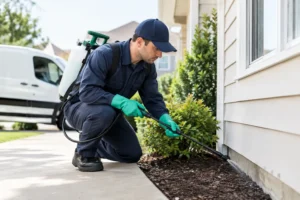
Once the source is clear, treatment can be tailored. For ants, that may mean targeted baiting and exterior barrier work around entry points rather than broad indoor spraying. For rodents, the safest and most effective plan usually combines trapping, sanitation guidance, and sealing gaps where rats or mice are getting inside. For mosquitoes, source reduction and focused treatments around breeding and resting zones often matter more than treating every inch of a yard.
For ongoing protection, monitoring becomes just as important as treatment. Follow-up visits, seasonal adjustments, and prevention work help stop small issues before they become expensive ones. That is especially valuable for landlords, property managers, and business owners who need reliable service across multiple units or locations.
Safe does not mean weak
This is one of the biggest misunderstandings in the industry. People often think there is a choice between safety and effectiveness. In reality, a well-designed pest management program should deliver both.
Professional products used in eco-conscious programs are selected for performance and applied according to strict label directions. More importantly, licensed technicians understand placement, dosage, timing, and pest behavior. That knowledge is what makes treatment effective. The product matters, but how and where it is used matters just as much.
There are trade-offs, of course. Some severe infestations may require a more aggressive response than a minor maintenance issue. A heavy rodent problem inside walls or a large termite infestation may need a broader treatment plan than a simple exterior prevention service. But even in those cases, the smartest providers still focus on minimizing exposure, explaining options clearly, and using the least disruptive method that can solve the problem.
The pests that respond well to eco friendly treatment
Many common Southern California pests can be handled effectively with eco-friendly strategies when the service is done correctly.
Ant control often improves when technicians identify the species and use baits that worker ants carry back to the colony. Rodent control becomes more dependable when trapping is paired with sealing access points and removing food sources. Spider, silverfish, and cockroach issues are often reduced by combining targeted treatment with moisture control, decluttering, and sanitation improvements.
Mosquito control also benefits from an eco-conscious approach because standing water management is one of the most powerful tools available. Wasp and bee situations depend heavily on location and risk level. If activity is near entrances, play areas, or customer-facing spaces, treatment needs to be fast and carefully managed.
Termites are a separate category because they can cause major structural damage. Even here, the best plan depends on the species, the extent of activity, and the construction of the building. A professional inspection is what determines whether localized treatment, monitoring, or a larger intervention makes the most sense.
What property owners should look for in a provider
If you are comparing companies, do not stop at the phrase eco friendly pest control on a website. Ask how they inspect, what they monitor, and how they reduce repeat activity over time. A dependable provider should be able to explain their approach in plain language.
You also want to know whether the service is customized. A single-family home in Long Beach, a restaurant in Orange County, and a multi-unit rental in Los Angeles do not have the same risk profile. The treatment plan should reflect the property type, the pest involved, the urgency of the problem, and who uses the space.
Fast response matters too. Pest problems rarely improve by waiting. Rodents multiply, bed bugs spread, and termites keep feeding. A company that can inspect quickly and put a practical plan in place helps limit both damage and stress.
That is where a local, family-owned company often stands out. Providers who work in these neighborhoods every day understand the pest patterns, seasonal shifts, and building types common across the area. At Impressive Exterminating, that local experience supports a straightforward goal: safe, effective service that solves the immediate issue and helps prevent the next one.
Prevention is where long-term value shows up
Anyone can focus on the visible pests. The better approach is to reduce the reasons they showed up at all.
That usually means sealing gaps around doors, pipes, vents, and utility lines. It may mean adjusting irrigation, trimming back vegetation, improving trash storage, or addressing food handling in kitchens and break rooms. For commercial properties, staff habits and maintenance schedules often play a bigger role than owners expect.
This is also why recurring service plans make sense for many properties. Ongoing maintenance allows technicians to monitor trends, catch new activity early, and adapt treatment before a small issue turns into a major one. For busy homeowners and property managers, that consistency can save time, money, and a lot of frustration.
Eco friendly pest control works best when it is treated as a system, not a one-time event. Inspection, treatment, monitoring, and prevention all support each other.
If you want pest control that respects your space and still gets results, ask for a plan built around your actual property and problem – not a generic spray-and-go visit. The right service should leave you with fewer pests, less worry, and a property that is better protected going forward.