A single roach sighting in a restaurant rarely means there is only one roach. In most cases, it means the conditions are right for more to follow. That is why restaurant roach prevention examples matter so much for owners, managers, and kitchen teams who cannot afford health code problems, bad reviews, or lost customer trust.
Roaches are built to survive in the exact places restaurants create every day – warmth, moisture, food debris, cardboard, floor drains, grease areas, and busy delivery schedules. In Southern California, where restaurants operate year-round and pest pressure never really disappears, prevention has to be part of daily operations, not just an emergency response after a problem shows up.
Why restaurant roach prevention examples matter
The biggest mistake restaurants make is thinking pest control starts with treatment. Treatment matters, but prevention is what lowers risk between service visits and keeps small issues from becoming active infestations. A roach problem can develop behind a prep line, under a dishwasher, or inside a dry storage area long before staff sees activity during business hours.
Good prevention is practical. It focuses on sanitation, exclusion, moisture control, and regular monitoring. It also has to fit a real restaurant environment where staff are moving fast, vendors are coming in, and kitchens are under constant pressure to stay operational.
10 restaurant roach prevention examples that work
1. Nightly deep cleaning around equipment
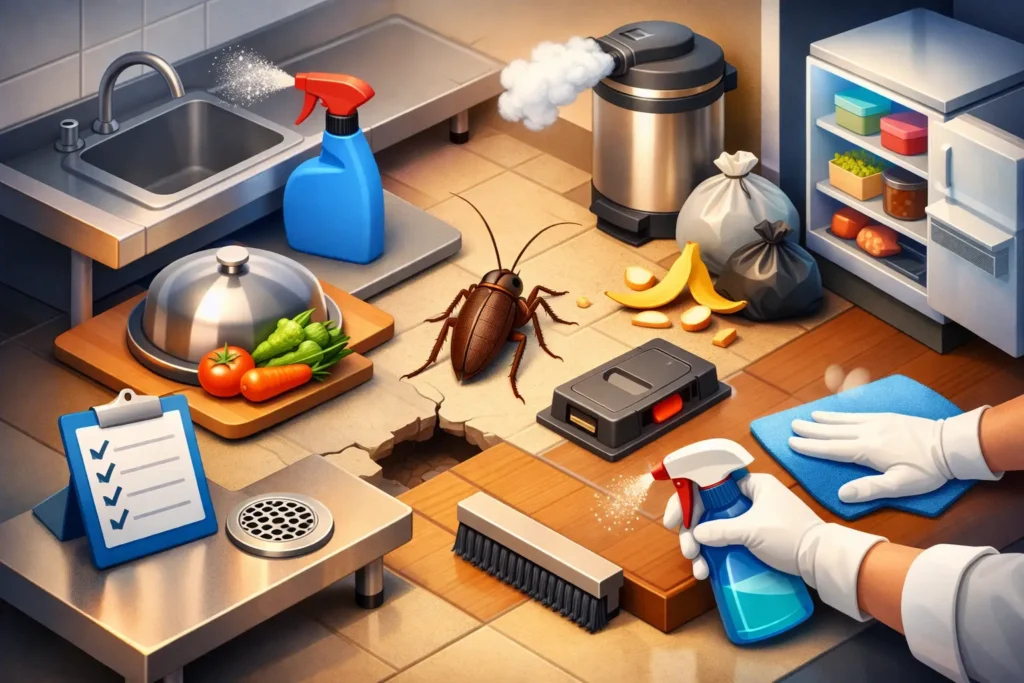
Surface cleaning is not enough in a commercial kitchen. Roaches feed on grease film, crumbs, spilled sauces, and food particles that collect behind fryers, under coolers, and beside cooking lines. A strong prevention program includes scheduled nightly cleaning in the places staff usually skip when service gets hectic.
This means pulling movable equipment, cleaning casters and wall gaps, and removing grease buildup under and behind prep stations. The trade-off is time. Deep cleaning takes more labor, but it is far less expensive than shutting down part of a kitchen because pests have moved in.
2. Sealing cracks, wall gaps, and utility openings
Roaches do not need a large opening to enter or spread. Small gaps around pipes, conduit lines, wall penetrations, and floor joints can become travel routes between kitchens, storage rooms, shared walls, and neighboring suites.
One of the most effective restaurant roach prevention examples is a detailed exclusion checklist. Seal gaps around plumbing, repair broken base coving, close spaces behind sinks, and address openings around electrical lines. In multi-tenant properties, this matters even more because a clean restaurant can still get pressure from an adjacent business.
3. Managing floor drains and moisture sources
German cockroaches and other common roaches are strongly drawn to moisture. That makes floor drains, mop sinks, leaking faucets, condensation lines, and dishwashing areas high-risk zones. If a drain smells foul or stays wet with organic buildup, it can support pest activity even if the rest of the kitchen looks clean.
Restaurants that prevent roaches well usually have a drain maintenance routine. Drains are cleaned on schedule, leaks are repaired quickly, and standing water is not left overnight. This is one of those areas where sanitation and plumbing overlap, and both have to be handled consistently.
4. Storing food and supplies off the floor
Roaches love clutter because it gives them cover. Dry goods stacked directly on the floor, cardboard left in corners, and crowded storage rooms all create ideal harborage areas. Prevention works better when storage is organized to reduce hiding spots and make inspections easier.
Ingredients should be sealed in pest-resistant containers, shelving should stay off the wall when possible, and inventory should not be packed so tightly that no one can see behind it. Cardboard is a common issue. Deliveries come in daily, but boxes should be broken down and removed promptly instead of collecting in back rooms.
5. Rotating stock and checking incoming deliveries
Not every roach enters from the outside. Some are introduced through deliveries, especially when boxes, produce containers, or paper goods arrive from infested storage facilities or transport vehicles. Restaurants that ignore receiving procedures leave a major gap in their prevention plan.
A better approach is simple. Staff should inspect incoming shipments, avoid storing excess cardboard, and rotate inventory so older products do not sit untouched in dark corners. This also helps reduce spills and spoiled goods that can feed roaches over time.
6. Limiting food debris in employee areas
Break rooms, lockers, office corners, and employee beverage stations are often overlooked during pest prevention. Yet these areas can become quiet feeding zones after hours, especially when kitchen sanitation is stronger than front-of-house or staff-only spaces.
Roach prevention has to cover the whole property. That includes cleaning under vending areas, removing trash daily, and making sure personal food is not left overnight in bags or drawers. A restaurant can do many things right in the kitchen and still create risk through inconsistent habits in support areas.
7. Tightening trash and grease handling
Dumpster pads, trash rooms, and grease disposal areas are major pest pressure points. If exterior bins stay open, leak residue, or sit against entry doors, roaches can build up outside and move inward. The same is true for indoor trash stations that overflow during busy periods.
Strong prevention means using liners, cleaning receptacles regularly, closing lids fully, and keeping exterior waste areas as clean as the kitchen itself. It also helps to position dumpsters away from doors when the property allows it. Sometimes layout limits your options, but cleanliness and timing still make a noticeable difference.
8. Using monitoring tools instead of guessing
One of the best restaurant roach prevention examples is routine monitoring with sticky traps placed in key locations. Monitors help identify where activity is starting, where moisture is drawing pests, and whether a sanitation or exclusion problem is developing.
Without monitoring, managers often rely on random sightings, which usually happen late in the problem. With monitors, pest professionals can spot trends earlier and adjust treatment or recommendations before the issue spreads. This is especially useful in larger kitchens, bars, bakeries, and multi-room food service operations where pests can stay hidden for weeks.
9. Training staff on what to report
Prevention fails when employees assume someone else will handle it. Staff should know what roach activity looks like, where to check, and how to report issues immediately. That includes live sightings, droppings, egg cases, unusual odors, and signs of activity inside cabinets or near equipment motors.
Training does not need to be complicated. It just needs to be consistent. When managers build pest awareness into opening, closing, and cleaning routines, small warning signs are less likely to be ignored. In fast-moving restaurants, that early reporting can save a lot of money and stress.
10. Scheduling professional service before there is a crisis
The most reliable prevention programs combine in-house best practices with ongoing commercial pest control. Professional service adds inspection, targeted treatment, trend tracking, and expert recommendations based on how roaches actually behave in restaurant environments.
A one-time spray is rarely the full answer, especially in busy food service settings. Roach pressure can come from drains, neighboring tenants, loading zones, or hidden wall voids. A customized service plan is usually more effective than waiting until staff or customers start seeing pests in daylight.
What restaurants often get wrong
The most common problem is inconsistency. A restaurant may deep clean after an inspection, then slowly return to rushed end-of-night routines. Or management may focus on the kitchen while overlooking storage rooms, offices, and receiving areas. Roaches take advantage of those weak spots.
Another issue is relying too heavily on over-the-counter products. Store-bought sprays can scatter roaches into new hiding areas and make a larger infestation harder to track. In commercial settings, the right approach depends on the species, level of activity, building layout, and sanitation conditions.
When prevention is no longer enough
If you are seeing roaches during daylight hours, spotting repeated activity in multiple areas, or finding droppings and egg cases around equipment, the problem may already be established. At that point, prevention still matters, but it needs to be paired with immediate professional treatment.
Restaurants cannot afford slow response when pests threaten operations, staff confidence, or customer experience. That is why many local businesses in Los Angeles County and Orange County work with experienced providers like Impressive Exterminating to build prevention into regular service instead of treating pest control like a last-minute emergency.
A clean restaurant should also be a protected restaurant. The best prevention plan is the one your team can actually follow every day, with clear accountability, fast response when issues appear, and enough professional support to keep small warning signs from turning into major problems.