A fumigation appointment isn’t a typical pest control visit. Your home or business needs to be vacant, sealed, and completely unavailable for a period of time, so knowing exactly how to prepare for fumigation protects the people, pets, and belongings inside while keeping treatment on schedule. Exact instructions vary by pest, property type, and fumigant, but careful preparation is what prevents the delays that cause the most stress on fumigation day.
For Southern California property owners, fumigation is most often tied to serious drywood termite activity, or recommended when a targeted treatment can’t reach the full extent of an infestation (see our comparison of fumigation versus heat treatment if you’re still deciding which method fits your situation). Your licensed fumigation provider will supply a preparation notice specific to your job — that notice is the final authority, even if a neighbor, tenant, or online checklist suggests something different.
Start With Your Actual Fumigation Instructions
Read the preparation notice as soon as you receive it, then read it again the day before service. It should tell you exactly when to leave, how long the property will stay closed, what needs to be bagged or removed, and when you’re allowed back. Don’t assume every fumigation follows the same timeline — most residential jobs require the home to be vacant for two to three full days, but the exact window depends on the structure’s size, the fumigant used, and the extent of the infestation.
Confirm who’s responsible for each step ahead of time. Homeowners typically handle the interior themselves, while a property manager coordinates tenant notices, access, utility arrangements, and parking for multi-unit buildings. At a commercial property, assign one point person who can make decisions on the spot if the crew finds an access issue or needs approval during setup.
If any instruction is unclear, ask before fumigation day. A quick call can prevent a canceled service, added costs, or a treatment that has to be rescheduled entirely. The goal is simple: give the licensed crew safe, complete access to the structure so the work can actually be effective.
How to Prepare Inside the Property
Fumigation requires more than just leaving the building. Start early so you’re not scrambling to pack food or move furniture at the last minute.
Protect Food, Medicine, and Consumable Items
Anything people or pets might eat, drink, chew, or put in their mouth needs special handling — this includes pantry and refrigerator food, pet food, vitamins, medications, tobacco products, and certain cosmetics or dental products. Your preparation notice will tell you whether these items need to be removed from the property entirely, sealed in approved bags, or placed in approved containers.
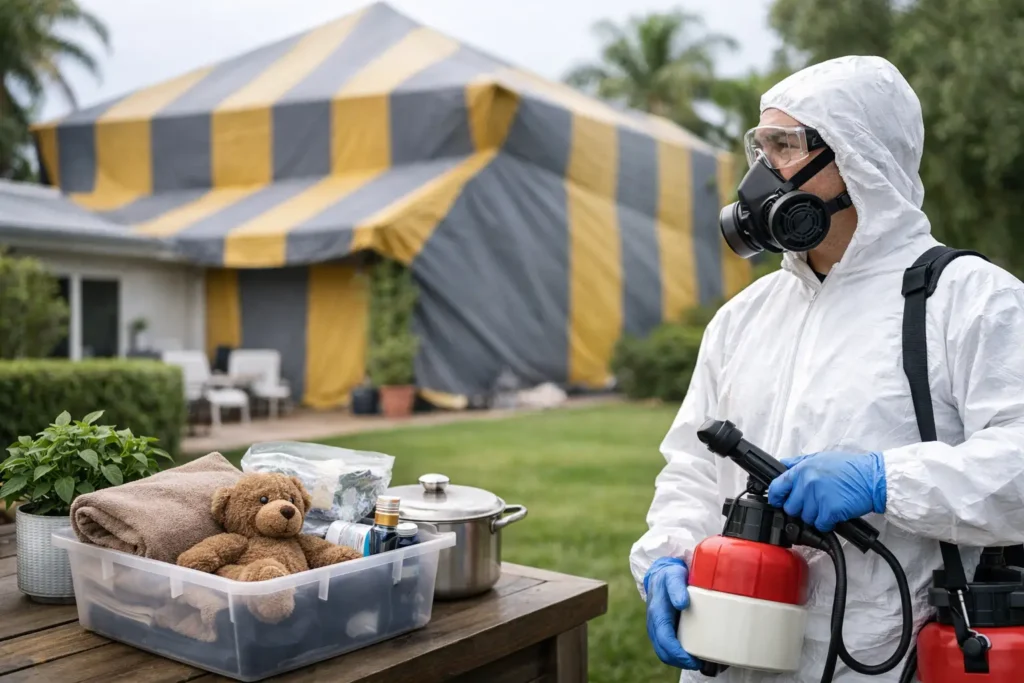
Don’t rely on ordinary zipper bags, plastic wrap, or loosely closed containers — these typically don’t meet fumigation requirements. When bagging is required, follow the specified double-bagging process exactly and avoid trapping air between the bags, since trapped air can compromise the seal. If you’re unsure whether something counts as “consumable,” treat it cautiously and ask your provider directly rather than guessing.
Before bagging anything, clear out expired food and items you don’t plan to keep. It makes the whole process faster and gives you a cleaner pantry when you return.
Remove People, Pets, and Living Things
Everyone must leave the building for the full period stated by the fumigation company — residents, guests, employees, customers, and contractors alike. Plan ahead for children, older relatives, and anyone who depends on medication or mobility equipment stored inside, since you won’t be able to retrieve anything once treatment begins.
All pets have to be removed — dogs, cats, birds, reptiles, fish, and small caged animals included. Fish tanks are a common point of confusion. In most cases, fish and the aquarium itself need to leave the structure entirely; your provider will confirm the exact requirement based on the fumigation method. Don’t improvise with a plastic cover or assume an air pump makes it safe to leave a tank behind — fumigant gas can still penetrate.
Take houseplants, patio plants that will be enclosed by the tent, and any other living plants out of the treatment area if instructed. Exterior landscaping may need trimming or temporary relocation so the crew can safely install the tent and inspect the property’s perimeter.
Make Rooms Accessible
Open interior doors, closets, cabinets, drawers, and access panels as directed. The fumigant needs to circulate through the entire structure, including the spaces where termites may actually be active. Move furniture away from walls if your preparation notice requests it, and clear anything blocking attic hatches, crawlspace entries, electrical panels, or water-heater access.
You generally don’t need to strip beds, empty every closet, or remove electronics unless your provider specifically tells you to. Over-preparing creates unnecessary work — focus on the instructions for your specific treatment rather than packing up the entire property “just in case.”
Prepare the Outside for Safe Crew Access
The crew needs room to secure the structure and work all the way around its exterior. Unlock gates, garages, sheds, and side-yard access points included in the treatment area. Let your provider know in advance about locked areas, alarm systems, solar panels, delicate landscaping, or any structure that might complicate tenting.
Trim trees, vines, shrubs, and branches away from the building where necessary. Outdoor furniture, grills, toys, planters, and decorative items near the walls may need to be moved, particularly for homes with tight side yards or dense landscaping where clear access makes installation both safer and faster.
Turn off exterior lights if instructed, and make sure the crew can reach electrical and utility connections without obstruction. If your home has a security alarm, coordinate with the alarm company or disable the system per your provider’s instructions — a false alarm during fumigation creates avoidable disruption for you and for emergency responders.
Arrange Utilities, Vehicles, and Temporary Accommodations
Utility requirements depend on the specific fumigation plan. Gas service may need to be shut off by the utility company or a qualified professional, while electricity may need to stay active for monitoring equipment. Never disconnect gas lines or attempt utility work yourself unless you’re qualified and specifically directed to.
Move vehicles away from the property before the crew arrives, and keep driveways, curb space, and access routes clear for service vehicles. If you live in a community with parking restrictions, gates, or an HOA, notify the appropriate contact well in advance.
Plan where you’ll actually stay during the vacancy period. Book pet boarding, arrange for family or friends, or reserve lodging early if treatment falls during a busy season. Business owners should notify employees and customers, adjust deliveries, secure sensitive records, and plan for temporary operations if the facility will be closed for the duration.
For rental properties, provide written notice to tenants well ahead of time, including clear move-out and re-entry expectations. A tenant who returns early — or leaves a pet inside — can delay the entire project for everyone involved.
Leave the Property Ready for the Crew
On the morning of service, do a final walk-through. Check bedrooms, bathrooms, closets, garages, storage areas, and outdoor enclosures for people, pets, and any consumable items that may have been missed. Lock up valuables as you normally would, but leave the required entry points accessible to the crew.
Take essential items with you — keys, medications, identification, chargers, work materials, and anything you’ll actually need while away. Leave contact information with the fumigation company and keep your phone available in case the crew has a question during setup.
Do not enter the building once fumigation begins, for any reason. Only return after licensed professionals have completed the required clearance procedures and officially authorized re-entry. A tent being removed does not automatically mean the property is safe to occupy — always wait for formal clearance.
What to Expect When You Return
Once you receive clearance, air out the property as instructed and inspect it at a normal pace. You may notice that windows were opened or that some exterior items were moved during setup and removal. Confirm utilities are operating properly, reset any alarms as needed, and only return food or belongings after following the provider’s directions exactly.
Fumigation addresses the infestation that’s inside the structure at the time of treatment, but it’s important to know it doesn’t create lasting protection against a new colony moving in afterward. Long-term termite prevention still involves correcting moisture issues, sealing entry points, repairing damaged wood, and scheduling periodic inspections — especially important for properties with a history of termite activity or conditions that continue to attract pests.
A well-prepared fumigation day isn’t about doing more than necessary. It’s about following the right instructions, protecting everyone who uses the property, and giving your treatment team the access they need to deliver a safe, effective result. If you’re uncertain about even one item on your checklist, ask before the crew arrives — clear answers now make the return to your home or business much easier.
Frequently Asked Questions
How long do I have to stay out of my house during fumigation?
Most residential fumigations require the property to be fully vacant for two to three days, though the exact timeline can range from about 24 hours to a week depending on the fumigant used, the size of the structure, and the extent of the infestation. Your licensed provider will confirm the specific window for your property in writing — treat that notice as the final word over any general estimate.
What food do I need to remove or bag before fumigation?
Anything people or pets could eat, drink, or put in their mouth needs attention — pantry and refrigerated food, pet food, vitamins, medications, tobacco, and certain cosmetics or dental products. Items that must stay in the home typically need to be double-bagged in approved fumigation bags, not ordinary zipper bags or plastic wrap, which don’t reliably block the fumigant.
Do I need to remove my fish tank before fumigation?
Yes, in most cases. Fish and their aquarium generally need to leave the structure entirely during fumigation, since fumigant gas can penetrate standard tank covers and affect the water and fish inside. Don’t assume an air pump or plastic cover makes it safe to leave a tank behind — confirm the exact requirement with your provider.
Can I stay in my backyard or garage during fumigation?
No. The entire treatment area, including attached structures like garages and any enclosed patios covered by the tent, must be completely vacant of people and pets for the full duration of treatment and clearance. Only areas specifically excluded from the tenting plan by your provider may remain accessible.
What happens if I forget to remove something before fumigation?
Depending on what was missed, this can delay the appointment, require the crew to reschedule, or in the case of medications and valuables, mean the item is inaccessible until clearance is granted days later. This is exactly why a final walk-through on the morning of service — checking every room, closet, and outdoor enclosure — matters so much.
Do I need to turn off the gas before fumigation?
Sometimes, depending on the fumigation plan and the fumigant used — but this should only be done by the utility company or a qualified professional, never attempted yourself. Your preparation notice will specify whether gas service needs to be shut off and who is responsible for doing it.
How soon can I eat food that was left in my house during fumigation?
Only food and items that were properly bagged or stored according to your provider’s exact instructions are considered safe after clearance. Anything left unprotected in the treatment area, or bagged incorrectly, should be treated as compromised — when in doubt, ask your provider before consuming or using an item you’re unsure about.
Is fumigation preparation different for a business than a home?
The core steps are similar — removing people, food, pets, and plants, and making the structure accessible — but businesses typically need additional planning around notifying employees and customers, securing sensitive records and equipment, coordinating deliveries, and arranging temporary operations during the closure. A single point of contact who can make decisions on setup day is especially important for commercial properties.