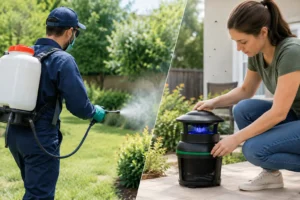

A trail of ants across the counter. Scratching in the attic at 2 a.m. A tenant texting about bed bugs. Pest problems rarely show up on a convenient schedule, and the plan you pick to deal with them matters more than most homeowners realize.
The best pest control plan isn’t the cheapest one-time spray, and it isn’t automatically the most expensive monthly subscription either. It’s the plan that matches the pest you actually have, protects the people on your property, and is priced fairly for what you get. In Los Angeles County and Orange County, where mild weather keeps ants, rodents, spiders, and mosquitoes active nearly year-round, “set it and forget it” pest control rarely works — but neither does overpaying for service you don’t need.
This guide breaks down how pest control plans are actually structured, what a fair one should include, and how to tell a strong provider from a company that’s just selling a subscription.
Monthly, Quarterly, or One-Time? What the Different Plans Actually Mean
Most residential pest control in Southern California falls into one of three structures:
One-time treatment. A single visit to resolve a specific, contained issue — a wasp nest, an isolated ant flare-up, a one-off spider problem. This works when the source is obvious and easy to correct. It’s not a good fit for termites, bed bugs, or an infestation that’s already spread through the structure.
Quarterly (bi-monthly) service. Treatment roughly every three months, timed around seasonal pest pressure. This is the most common ongoing plan nationally, and for many Southern California homes it strikes a reasonable balance between coverage and cost — typically running somewhere in the range of $100–$300 per visit depending on home size and pest pressure.
Monthly service. More frequent visits, usually recommended for properties with heavier pest pressure — dense landscaping, older construction, a history of recurring ants or rodents, or commercial sites like restaurants that need consistent documentation.
A good provider won’t lock you into the most expensive tier by default. They should be able to explain, based on an actual inspection of your property, why a given frequency makes sense — and be willing to adjust the schedule seasonally (more frequent in spring/summer ant season, less in cooler months) if that’s a better fit.
Also Check: How to Choose an Exterminator You Can Trust
Start With an Inspection, Not an Assumption
Every reliable pest control plan starts with someone actually looking at your property, not a phone quote based on square footage alone. Different pests enter differently, nest differently, and need different treatment:
- Pavement ants and carpenter ants aren’t treated the same way.
- A mouse issue may need sealing and trapping; a roof rat problem may need attic and tree-line inspection.
- Bed bugs need a detailed room-by-room inspection, not a generalized spray.
A technician should ask what you’ve seen, where, and for how long, then physically check the areas that matter — attics, crawl spaces, foundation lines, moisture-prone areas — before recommending a plan. If a company quotes a flat rate over the phone with no inspection, that’s a sign the “plan” may be more about the subscription than your actual pest problem.
What a Strong Ongoing Plan Should Include
At minimum, a legitimate maintenance plan should include:
- A property inspection to identify current activity, entry points, and conducive conditions (moisture, clutter, vegetation touching the structure).
- Targeted treatment, not blanket spraying — interior treatment when needed, exterior perimeter work as a baseline.
- A defined callback policy. Ask directly: if pests return between visits, is the re-treat free, and how fast can they get back out? (Impressive Exterminating’s guarantee: if pests return between visits, we return to re-treat at no additional cost.)
- Exclusion and prevention recommendations — not just “we sprayed,” but practical guidance on sealing, moisture control, food storage, and landscaping.
- Clear documentation, especially important for landlords, property managers, and commercial accounts that need a paper trail for tenants, inspectors, or insurers.
Also Check: How to Prepare for Fumigation: A Complete Checklist for Homes and Businesses
Compare Value, Not Just the Sticker Price
The lowest advertised monthly rate isn’t always the cheapest plan over a year. A plan that treats symptoms without finding the source often leads to repeat visits, property damage, tenant complaints, or an eventual, more expensive specialized treatment (think: a $45/month general plan that never catches a termite or bed bug problem early).
Before comparing prices, ask:
- Is the company licensed and insured?
- Do they inspect before quoting, or quote blind?
- What exactly triggers a free callback vs. a new charge?
- For rodents — is entry-point sealing included, or extra?
- For termites or bed bugs — is this covered under the general plan, or does it require a separate, specialized service?
When You Need More Than a General Plan
A standard maintenance plan is built for everyday pests — ants, spiders, roaches, occasional rodent activity. It is not a substitute for specialized treatment when:
- Termites are suspected — this needs a licensed inspection and a species-specific treatment plan, not a routine perimeter spray.
- Bed bugs are confirmed — these require a dedicated inspection and treatment protocol.
- Rodents have an established entry point — exclusion work (physically sealing the structure) is usually necessary alongside trapping.
A trustworthy provider tells you honestly when your issue falls outside the standard plan instead of quietly under-treating it to keep your business.
Choosing a Provider You Can Actually Reach
Pest problems are stressful specifically because they show up at inconvenient times. Look for a local, licensed, family-owned provider with a track record you can verify — Google reviews that mention follow-through and responsiveness, not just “they came out.” Ask about same-week availability and what happens if you call between scheduled visits.
Impressive Exterminating builds pest control plans for homes and businesses across LA County and Orange County starting around $45/month, with a free inspection and a re-treat guarantee if pests return between visits.
Call (562) 246-9044 to talk through what plan actually fits your property — not just the one that’s easiest to sell.
Frequently Asked Questions
Is monthly or quarterly pest control better?
It depends on your pest pressure, not a general rule. Quarterly service is the most common choice and works well for homes without heavy, recurring activity. Monthly service tends to make more sense for properties with dense landscaping, older construction, a history of ants or rodents, or commercial locations that need consistent documentation. Many providers can also adjust frequency seasonally — more visits during spring and summer ant season, fewer in cooler months.
How much does a pest control plan cost per month in Los Angeles or Orange County?
Ongoing residential plans commonly start in the $45–$60/month range for general pest coverage, with quarterly-billed plans often running $100–$300 per visit depending on home size and pest activity. Specialized services — termite treatment, bed bug treatment, or rodent exclusion — are typically priced separately from the general maintenance plan, since they require a different scope of work.
What’s the difference between a one-time treatment and an ongoing plan?
A one-time visit addresses a single, contained issue, like a wasp nest or an isolated ant problem, and doesn’t include follow-up. An ongoing plan includes scheduled visits, monitoring for new activity, and (with most reputable providers) a guarantee that if pests return between visits, they’ll come back and re-treat at no extra cost.
If I sign up for a plan, does it cover termites or bed bugs?
Usually not automatically. Most general pest control plans are built around common household and perimeter pests — ants, spiders, roaches, occasional rodents. Termites and bed bugs typically require a separate, specialized inspection and treatment plan because the biology, entry points, and treatment methods are different. Ask specifically what’s included before assuming your plan covers everything.
Will pest control treatments hurt my pets or kids?
A responsible provider selects treatment methods (baits, targeted crack-and-crevice applications, traps) based on the pest and location, and will tell you in advance if any area needs to be avoided after service and for how long. If you have pets, young children, or sensitive household members, mention it before treatment so the technician can adjust the approach — this is a standard, reasonable request, not a special accommodation.
How do I know if a pest control company is actually licensed in California?
Ask directly for their state pest control license number, and you can verify it through the California Department of Pesticide Regulation or the Structural Pest Control Board. A legitimate company will provide this without hesitation.
What should I ask before signing a pest control contract?
At minimum: What’s the guarantee period between visits? Can I add services (like rodent exclusion) mid-contract if a new issue comes up? What products are used, and are they pet/child safe once dry? Is there a cancellation fee, and how much notice is required?