You usually do not see the first rat. You hear it in the wall after dark, catch a sharp odor near a storage room, or notice chewed packaging in the pantry and hope it was a one-time problem. In reality, rat infestation warning signs tend to show up before you ever spot the animal itself. The sooner you recognize them, the easier it is to stop property damage, health risks, and a much larger infestation.
For homeowners, landlords, and business owners across Southern California, speed matters. Rats reproduce quickly, contaminate food and surfaces, and can damage wiring, insulation, drywall, and stored inventory. A small issue in an attic, crawl space, garage, restaurant back room, or apartment utility area can turn into a recurring problem if the entry points and nesting conditions are left alone.
The most common rat infestation warning signs
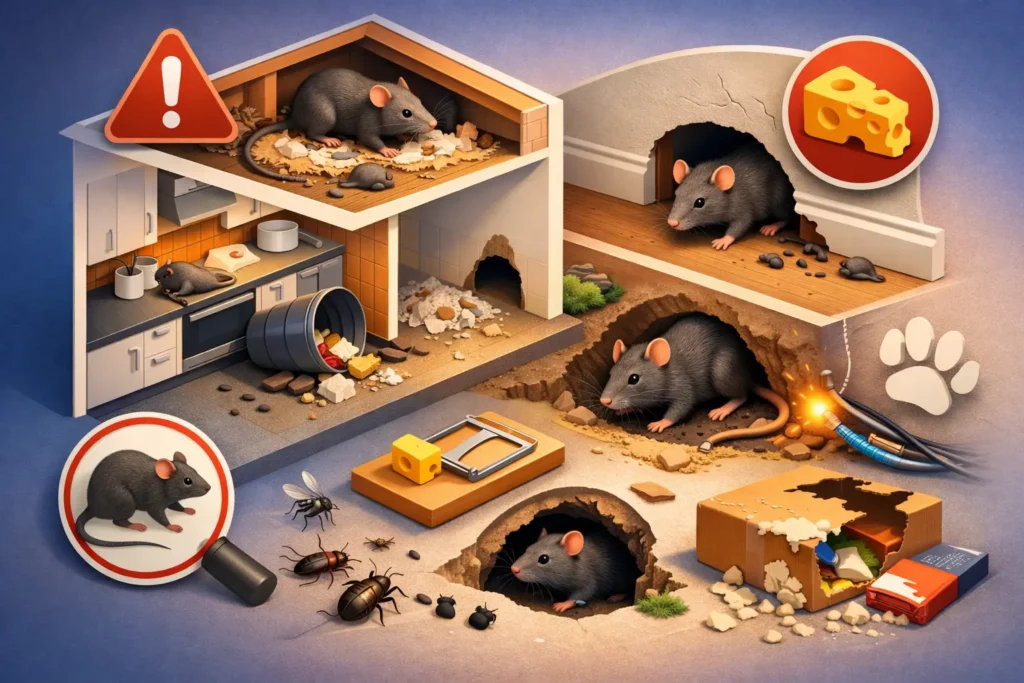
One of the clearest signs is droppings. Rat droppings are usually dark, pellet-shaped, and found near food sources, along baseboards, inside cabinets, under sinks, in garages, or around attic insulation. Fresh droppings look darker and softer, while older droppings become dry and brittle. If you keep finding new droppings after cleaning, that usually means the activity is current, not leftover from an old problem.
Another major warning sign is gnaw damage. Rats constantly chew to keep their teeth worn down, so they target cardboard, wood, plastic containers, drywall, and even electrical wiring. In homes, this may show up as damaged food boxes, chewed pet food bags, or frayed wires in the attic or garage. In commercial properties, it may appear around stock rooms, packaging materials, and utility lines. Chewing is not just messy. It can create fire hazards and expensive repairs.
You may also notice greasy rub marks. Rats often travel along the same routes, especially near walls, beams, pipes, and fence lines. As their bodies brush against these surfaces, they leave behind smudged, oily streaks. These marks can be subtle at first, but in heavier infestations they become easier to spot near entry holes and travel paths.
Strange noises at night are another common clue. Rats are most active after dark, so scratching, scurrying, squeaking, or movement in the ceiling can point to activity in walls, attics, crawl spaces, or under floors. One important detail is timing. If the noises happen mostly at night, rats are more likely than squirrels. If the sound is concentrated in one area, that may help identify where they are nesting.
Odor matters too. A rat infestation often creates a strong, musky smell that gets worse in enclosed spaces. In severe cases, urine odor can become noticeable in attics, basements, garages, and storage rooms. If a rat dies inside a wall void or inaccessible area, the smell can become especially strong for several days. Not every rodent issue creates an obvious odor right away, but when it does, it usually means the activity has been building for a while.
Rat infestation warning signs in and around the property
Indoor evidence is only part of the picture. Exterior conditions often explain why rats showed up in the first place. Burrows, especially around foundations, planter beds, sheds, and crawl space openings, can indicate roof rat or Norway rat activity depending on the environment. You may also see disturbed soil, nesting material, or droppings near outdoor storage areas and trash enclosures.
Fruit trees, bird feeders, overgrown vegetation, and accessible garbage can all support rat activity. This is especially relevant in Los Angeles County and Orange County, where mild weather allows rodent populations to stay active for much of the year. Rats do not need much to settle in. A small entry gap, a nearby water source, and regular access to food are often enough.
Pets can sometimes alert you before you find the physical evidence. Dogs may focus on one wall, cabinet, or section of the yard. Cats may stare at ceiling corners, vents, or under appliances where they hear movement. While pet behavior alone does not confirm an infestation, it often points to where a closer inspection should start.
Another overlooked sign is nesting material. Rats build nests from shredded paper, insulation, fabric, cardboard, and soft debris. These nests are often hidden in attics, wall voids, garages, storage rooms, and behind appliances. If you find a pile of torn material in a quiet, protected spot, that is not something to ignore.
Why early signs get missed
Many infestations start quietly. People clean up a few droppings and assume a door was left open. They hear one sound in the ceiling and decide it must be the house settling. They notice a bad smell in the garage and blame the trash bin. That delay gives rats time to breed and spread.
The challenge is that rat activity often looks minor until the population grows. One or two warning signs can still mean multiple rodents are present, especially if they have access to walls, attics, or crawl spaces where they stay hidden during the day. By the time a rat is seen in open living space or during business hours, the infestation is often more established than it first appears.
This is also why DIY trapping alone does not always solve the problem. Removing a few rats without sealing access points or addressing nesting areas may reduce activity temporarily, but it does not stop new rodents from coming in. Effective control depends on inspection, exclusion, sanitation recommendations, and targeted treatment based on the property layout.
Where rats are most likely to hide
In residential properties, attics are one of the most common trouble spots because they are warm, sheltered, and rarely disturbed. Garages also attract rats, especially when pet food, boxes, holiday storage, or clutter create cover. Kitchens, laundry rooms, and utility spaces become vulnerable when plumbing gaps or appliance openings give rodents a route inside.
For apartment buildings and rental properties, shared walls, trash areas, roof lines, and maintenance openings can all support movement from one unit to another. Property managers often discover that a complaint from one tenant is connected to a larger building-wide issue.
In commercial spaces, restaurants, offices, warehouses, and retail businesses face different pressure points. Dumpsters, delivery doors, stock rooms, and suspended ceilings often create access and harborage. Even a clean business can develop a rodent issue if surrounding conditions, neighboring units, or structural gaps are not addressed.
When to act on rat infestation warning signs
If you see fresh droppings, hear nighttime movement, notice chewing, or detect a persistent rodent odor, it is time to act. Waiting usually increases the cost and complexity of the problem. Rats do not stay neatly in one corner. They move through walls, ceilings, storage areas, and roof lines, which allows the infestation to spread fast.
There is also a safety issue. Rats can contaminate surfaces, damage food storage, and expose children, pets, tenants, and employees to unsanitary conditions. In businesses, even a small amount of visible rodent activity can affect customer trust and create compliance concerns.
A professional inspection helps separate a minor issue from a larger infestation. It also identifies the source. That matters because treatment should be customized to the property. A single-family home with roof rat activity needs a different strategy than a restaurant with alley access or a multi-unit property with recurring rodent complaints.
What effective rat control should include
Strong rat control is not just about setting traps. It should include a detailed inspection, identification of entry points, removal of active rodents, and practical prevention steps to reduce the chances of reinfestation. That may include sealing gaps, adjusting sanitation practices, trimming vegetation, improving storage, and monitoring high-risk areas over time.
Safe treatment methods matter too, especially for homes with children and pets and for commercial properties that need professional handling with minimal disruption. A dependable pest control provider should explain what they found, what they recommend, and what results you can realistically expect. Some infestations resolve quickly. Others take more follow-up depending on the structure, severity, and surrounding conditions.
At Impressive Exterminating, we see this often across homes and businesses throughout Southern California. The properties that get the best results are usually the ones that respond early, before the warning signs turn into widespread damage.
If something feels off in your walls, attic, garage, or work space, trust that instinct and get it checked. Catching rat activity early is one of the simplest ways to protect your property, your health, and your peace of mind.